Rave Panic Button
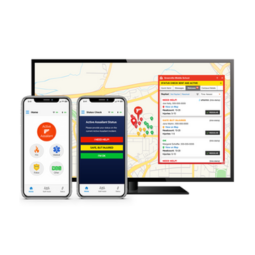
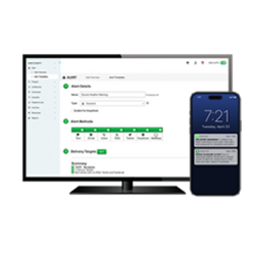
Our premier school alert app that notifies 9-1-1 and on-site staff while sharing floor plans and location data.


The mass shooting at Marjory Stoneman Douglas High School, the deadliest high school tragedy in U.S. history, precipitated a national conversation about school safety. Seventeen people lost their lives, and another seventeen were injured.
Among the victims was 14-year-old Alyssa Alhadeff. In her honor, the Alhadeff family launched Make Our Schools Safe (MOSS) in 2018. Since its establishment, the national nonprofit has been dedicated to protecting students, teachers and school staff. By collaborating with lawmakers, security advisors and families, MOSS has empowered districts to shift to a culture of proactive vigilance.
MOSS has been the driving force in advocating for state and federal passage of Alyssa’s Law. This legislation is specifically designed to address critical gaps in emergency response by requiring the installation of “silent” panic alarms that directly alert law enforcement and 9-1-1 dispatch. By removing intermediary delays, the Law ensures that first responders arrive on the scene with the speed and map-based situational awareness necessary to save lives.
While Alyssa’s Law regulations are implemented state by state, the core goal is a silent alert that reduces incident response times while supplying enhanced data to first responders. The cornerstone of the Law mandates that public elementary and secondary school buildings be equipped with a silent panic alarm system connected to local law enforcement.
Key components of Alyssa’s Law include:
Silent activation: The school panic alarm must trigger discreetly to avoid alerting an intruder and escalating the threat.
Direct PSAP connection: Integration with Public Safety Answering Points (PSAPs), bypassing internal school routing when seconds count.
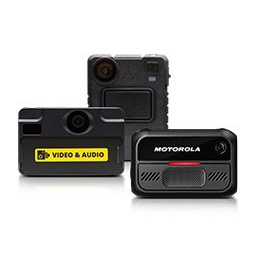
Verified data: Modern systems must often include live video, audio or precise location data to help first responders triage the scene effectively.
National industry standards: Systems must adhere to industry standards from organizations like the National Fire Protection Association (NFPA).
Achieving Alyssa’s Law compliance in the states where it has been implemented means embedding rapid response technology into the very foundation of your school’s security framework, including the school safety plan.
Core requirements for an Alyssa’s Law compliant emergency system include:
Our ecosystem of school safety technologies helps students, teachers and staff stay protected and connected.
As of April 2026, more than a dozen states have moved to require silent alarms directly connected to law enforcement.
Lawmakers in several other states have introduced Alyssa’s Law or similar school safety measures for consideration:
To prevent a patchwork of state-level protocols, several federal proposals aim to establish a national school safety technology standard:
One of the most significant changes prompted by Alyssa’s Law is the surge in school funding opportunities at both the state and national level. This influx has made school safety systems more accessible than ever:


Maximize your funding potential. Get expert guidance to identify and obtain school security grants for your district.
Exceeding Alyssa’s Law mandates, Motorola Solutions provides reliable, versatile emergency response systems that staff can activate in critical moments. Our technology is designed to move beyond basic compliance by providing the situational awareness first responders need to act with precision.
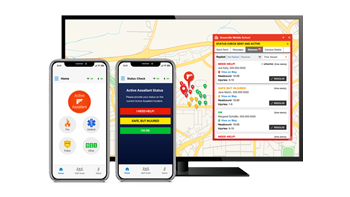
Our premier school alert app that notifies 9-1-1 and on-site staff while sharing floor plans and location data.
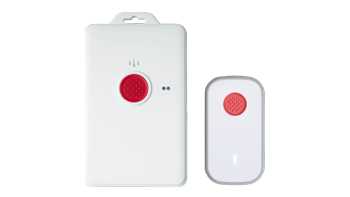
Discreet Bluetooth® devices (badges or fobs) that transmit precise indoor locations for immediate, silent response.
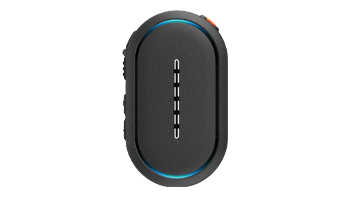
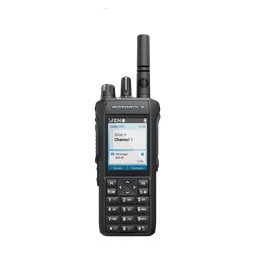
A unified wearable combining push-to-talk with a silent panic button, perfect for maintaining safety across large campuses.
Don’t let funding be a barrier to enhancing your school’s safety. Explore our available grant resources to help your district implement the technology needed to protect your students and staff.
Achieving compliance requires a strategic approach. Follow these steps to prepare:
Research: Explore the various panic button systems; consult with our experts to determine which one works best.
Audit current infrastructure: Examine your existing security infrastructure to identify gaps that could impact new system reliability.
Collaborate with law enforcement: Sync your technology with local dispatch centers.
Install systems: Implement your solution and ensure functionality.
Train employees: Make sure staff is trained so they know how to operate alerts in an emergency.
Stay updated on mandates: Make sure your tech remains in compliance with the law and grant guidelines.
Funding for Alyssa's Law is determined at the state level, meaning the process and available grants vary significantly from state to state. While some states have established dedicated grant programs for compliance, many others allow districts to use broader school safety appropriations or federal pass-through grants. Our team actively monitors this complex funding landscape. We work closely with school districts to help them identify and align specific funding opportunities with their school safety goals.
Alyssa’s Law requires the implementation of panic alarm systems that directly alert law enforcement, taking away the prior protocol of calling 9-11. Voice call dispatch can come with delays, but Alyssa’s Law eliminates the need, shortening time to response significantly.
No, Alyssa’s Law is not required in every state, but is being enacted state-by-state. The requirements also differ between states, while some require physical mounted buttons, others allow mobile apps.


Please wait...