Share this page
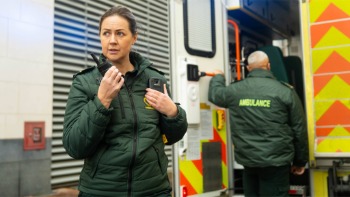
Dutch ambulance service revamps radio communications
Dutch frontline responders enhance critical communications
GGD Kennemerland addressed challenges with outdated radios that required frequent battery recharging by adopting our TETRA radios. The new lightweight and rugged radios deliver clear audio and the long-lasting IMPRES 2 batteries operate for entire shifts, significantly enhancing frontline safety and operational efficiency for the Dutch ambulance service.
- Fire & EMS
- Public Safety Radios
Tackling frontline challenges
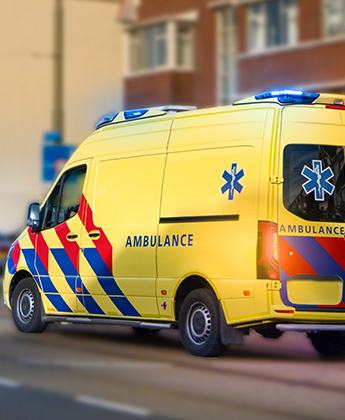
The ambulance service replaced its outdated portable radios with a fleet of MXP600 mission-critical TETRA portable radios. Integrating seamlessly with the MTM5400 mobile radios already deployed in their ambulances, the MXP600 provides crystal-clear audio and extended battery life.
Tackling frontline challenges
The ambulance service replaced its outdated portable radios with a fleet of MXP600 mission-critical TETRA portable radios. Integrating seamlessly with the MTM5400 mobile radios already deployed in their ambulances, the MXP600 provides crystal-clear audio and extended battery life.




The challenge
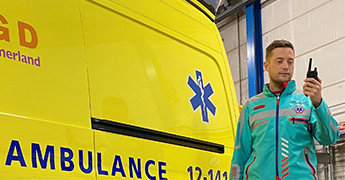
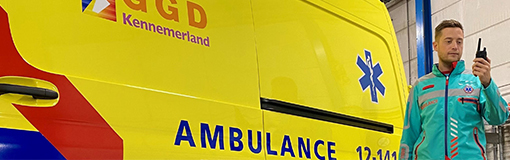
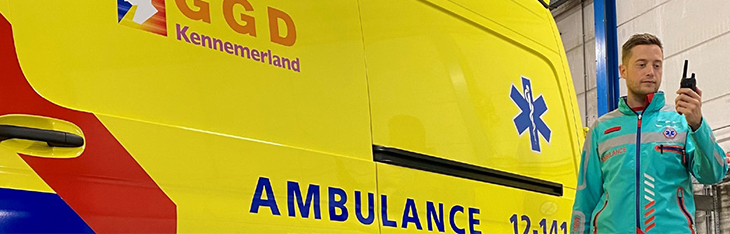
The GGD Kennemerland Ambulance Service needed to upgrade its radio fleet due to challenges with its outdated Motorola Solutions MTP850 TETRA portable radios, which had been in use for over a decade. A key problem was the impracticality of recharging or replacing batteries during shifts, which took up valuable time for the ambulance staff and led to the downtime of some radio communications. This limited the ambulance service’s emergency response capabilities, putting residents’ lives at risk.
The solution
The ambulance service successfully deployed MXP600 radios.
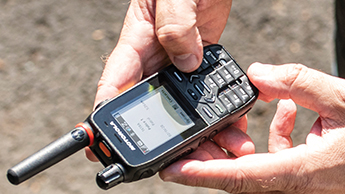
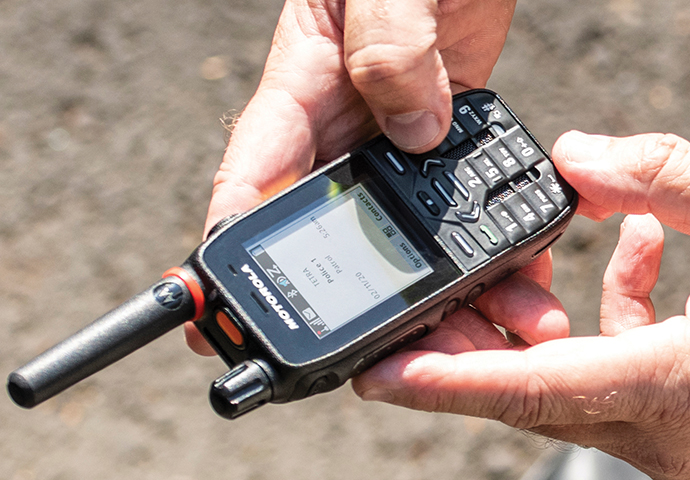
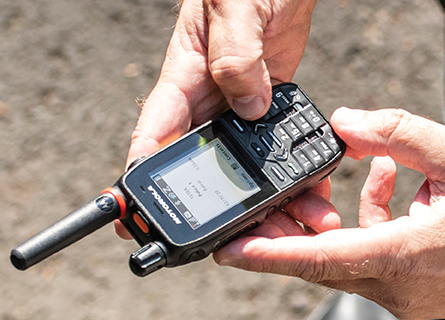
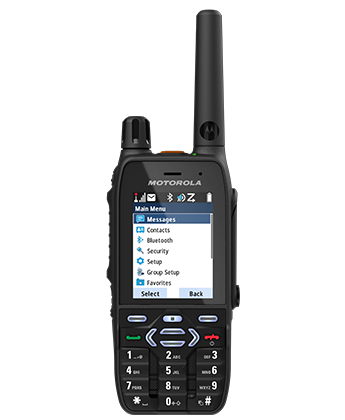
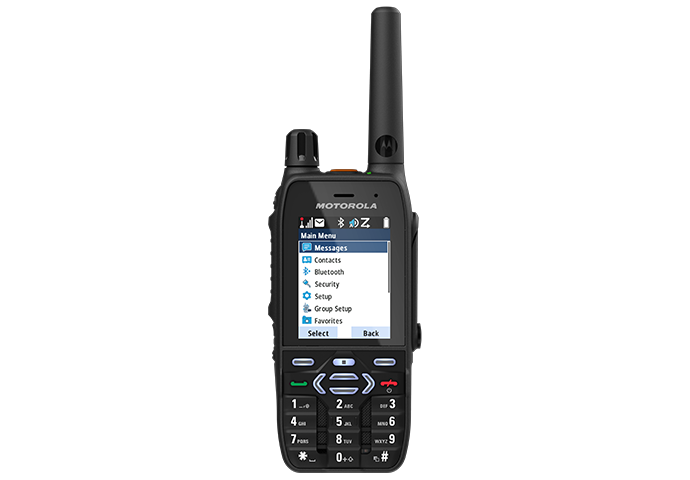
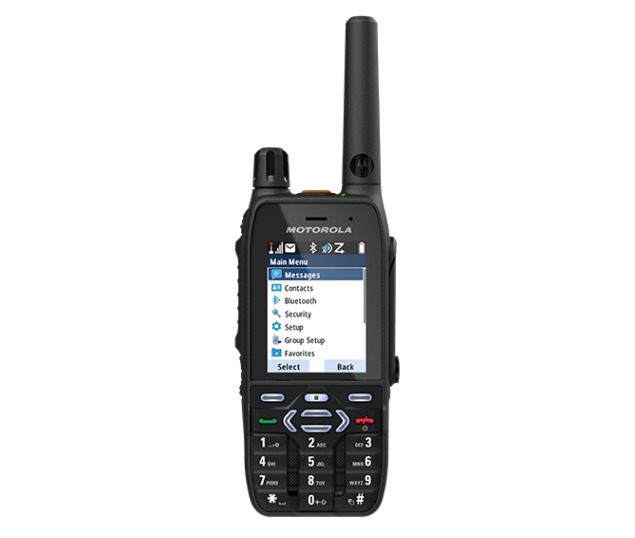
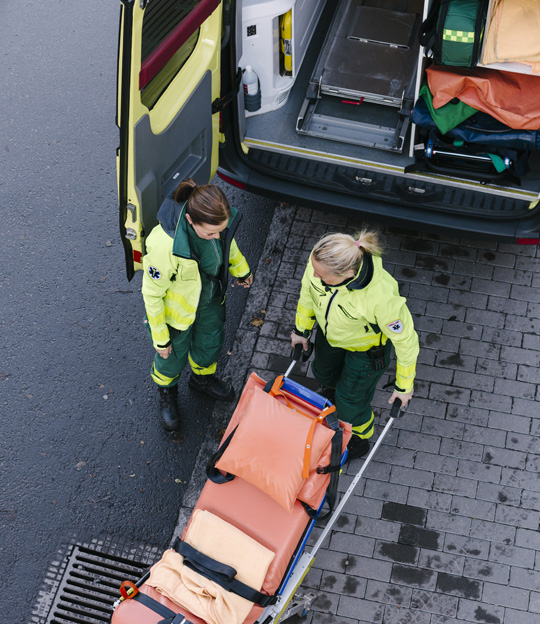
At the start of their shift, each ambulance team member collects an MXP600 radio from the station’s new, bespoke charging wall, modified for Kennemerland by SMELT Europe. The teams wear the MXP600s in soft leather carrying cases on their belts for ease-of-use. During major incidents, they can also use a remote speaker microphone (RSM) and earpiece for hands-free, discreet audio.
The impact
The IMPRES 2 batteries ensure the radios easily last a whole shift, eliminating the need for ambulance teams to recharge or replace batteries during shifts.
The radios feature innovative audio technology, a powerful loudspeaker and background noise cancellation. This enables clear voice communications, even during high-volume, large-scale emergencies or when sirens are going off.
The MXP600 has a large emergency button, programmable side buttons, a full keypad, and a large, clear display with an intuitive interface, allowing for simple operation and easy communications.
The radios were easy to programme and configure for interoperability with the highly encrypted Dutch Emergency Services National TETRA network (C2000), and are supplied with encryption keys for use on the network. The improved communications are boosting safety and operational efficiency during both individual and coordinated response efforts.
Ambulance teams can use their radios for voice communications and status messaging with the 24/7 emergency services control room. During major incidents, talk groups can be temporarily patched together, and ambulance teams have shared talk groups with the police and fire services, both regional and national, for large-scale communications.
Real customers. Real stories.
Discover other similar cases by product and industry.
NWAS modernizes alerts with two-way pagers.
North West Ambulance Service NHS Trust to equip Community First Responders with TETRA two-way pagers for improved critical response operations.
Ambulance services maintain trust with great communication
With P25 portable radios that stand up to the rigorous demands of a paramedic's working day, a rapid and reliable response means more lives saved.