
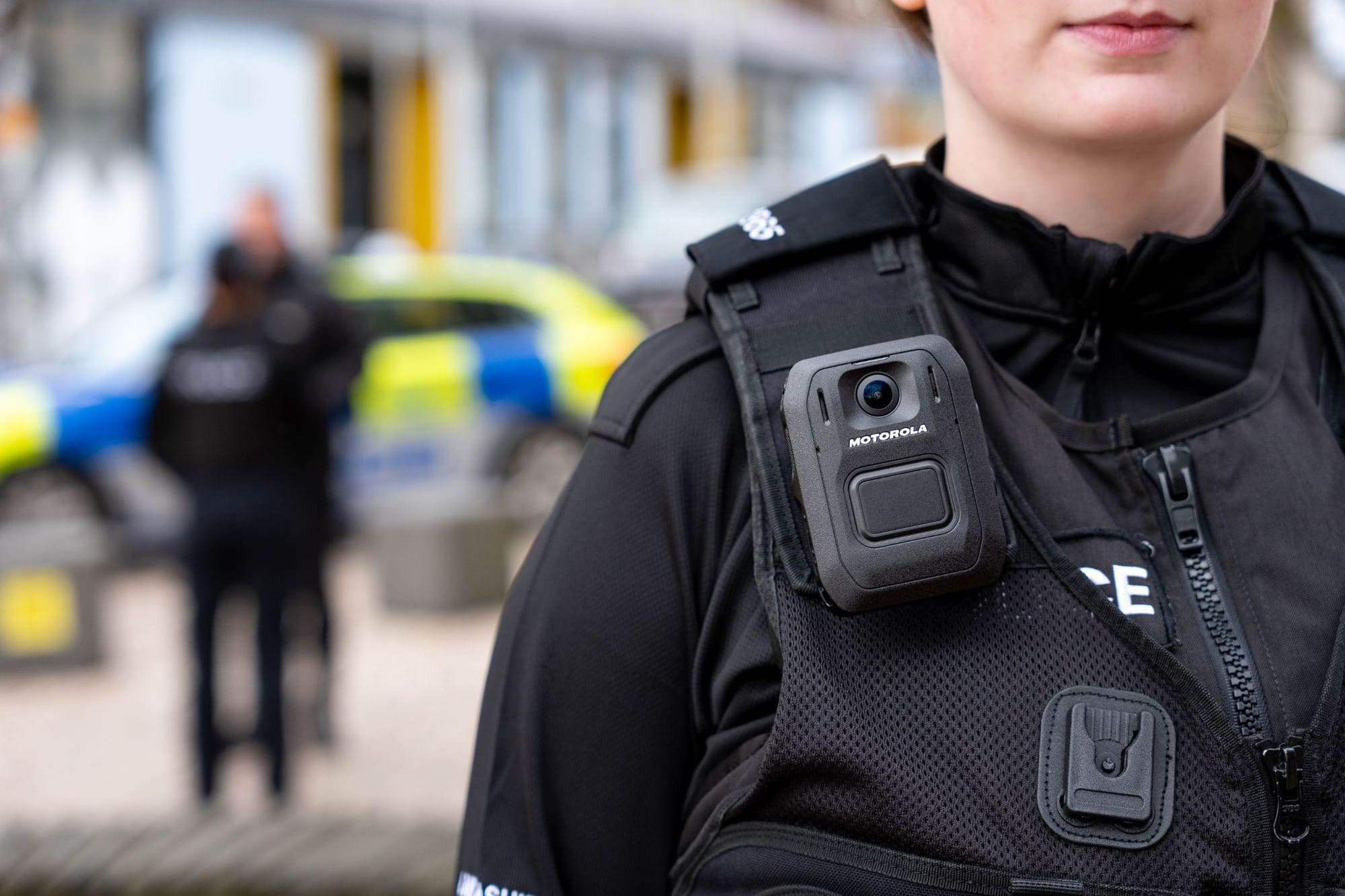
Digital evidence shapes almost every criminal investigation in Europe, appearing in roughly 85 to 90% of cases, according to the European Commission. Body footage, dashcam recordings and CCTV, drone imagery, and digital interview records carry immense operational and investigative value. However, every hour of video also carries a hidden weight. Each recording requires careful review, privacy protection and disclosure before it can serve justice. Getting this process right is one of the most important jobs in modern public safety. Choosing the right video redaction software isn't just a peripheral IT decision—it directly affects how quickly cases move to court, how much time officers spend on paperwork, and how well you protect community trust.
Why redaction now sits on the frontline
Strict legal frameworks like the U.K. GDPR, the Data Protection Act 2018 and the EU Law Enforcement Directive 2016/680 hold public safety teams to unforgiving legal deadlines. Missing a disclosure window is no longer just an administrative mistake because it can collapse a court case and trigger heavy fines, as well as destroy public trust.
That pressure builds every single day across frontline operations. Non-incident paperwork consumes 11.7% of officer time across 35 forces in the U.K. according to the Home Office Police Activity Survey, which pulls officers away from the communities that need them. The NPCC Policing Problem Book and Policing Productivity Review highlight that automated digital evidence workflows represent one of the largest levers for recovering valuable police capacity—up to 38 million hours per year service-wide.
When evidence backlogs grow, cases stall, officer burnout spikes and public confidence drops. Using powerful video redaction tools determines how quickly you can share evidence, protect vulnerable citizens and stand behind your material in court.
What public safety video redaction must deliver
The right video redaction solutions make evidence sharing fast and defensible without compromising public privacy, open cases or medical records. While different public safety agencies handle unique duties, they all require dependable redaction software for video processing to achieve the one primary goal: release critical material quickly while protecting everything that needs to stay private.
- Police and law enforcement: Police forces rely on dedicated software to prepare body camera, dashcam, and CCTV video for prosecutorial disclosure (like the Crown Prosecution Service) and Data Subject Access Requests (DSARs). The software automatically blurs bystanders, victims, minors, and undercover officers before files leave the station.
- Fire and rescue services: Fire teams use redaction software to process incident footage, thermal imaging clips, and training videos. Automated tools hide private property details, home interiors, and civilian faces before clips are shared with partner agencies or the public.
- Emergency medical services (EMS & Ambulance Trusts): Ambulance trusts handle video captured during patient care, which means following strict Patient Health Information (PHI) and GDPR rules. Redaction tools completely obscure patient records, physical trauma, and identities before footage is used for legal reviews or staff debriefs.
- Public and media disclosure: Communications teams rely on software to respond quickly to Freedom of Information Act (FOIA) requests. Automated masking lets agencies fulfill statutory transparency requirements while safeguarding citizen privacy.
Beyond facial blurring: What data needs redaction
Effective redaction goes far beyond hiding faces. Video and audio contain multiple layers of sensitive information. A basic face blur leaves huge privacy risks behind if a spoken address, a badge number, or a house sign stays visible on screen.
A privacy-first redaction system needs to catch all sensitive layers at once:
- Visual PII and personnel identifiers: Faces of victims, minors, patients and bystanders, plus uniform badges and unique tattoos that could reveal officer identities.
- Medical and sensitive documentation: Patient charts, triage notes, crime scene whiteboards and active device screens.
- Environmental and location identifiers: Number plates, house numbers, street signs and private home spaces.
- Audio identifiers: Spoken names, medical histories, addresses, phone numbers and radio dispatch chatter on the soundtrack.
Why manual video redaction can’t scale for modern policing
Traditional redaction tools belong to a simpler era. In the past, analysts, used to sit at desktops and manually blur faces frame by frame, one clip at a time. That slow labour-intensive process cannot handle the massive volume of digital evidence flooding into agencies today, leading to backlogs and burned-out teams.
The issue runs deeper than speed alone. When evidence remains trapped in isolated software that cannot connect with primary policing applications, work comes to a sudden halt. Forcing officers to re-key data manually into separate databases wastes time and can introduce preventable costly human error.
Evaluating total cost of ownership: Looking past the upfront price
When choosing video redaction software, look past the initial price tag and consider your total cost over time. What looks like a cheap option on day one can become expensive if the software limits how you move your data or charges extra fees down the road. Under guidelines like the UK Procurement Act 2023, agencies evaluate software on long-term value (Most Advantageous Tender) rather than lowest upfront cost alone.
Keep these core factors in mind during your evaluation:
- Free data movement: Make sure you can export or share your evidence archive with courts, partner forces, or regional teams without surprise export fees.
- Open file formats: Check that video is saved in standard formats so files stay accessible without relying on proprietary software to open them later.
- Flexible hosting: Pick platforms that support cloud, hybrid, or on-premises storage without financial penalties if your IT strategy changes.
- True control means keeping full ownership of your data, your workflows, and your long-term budget.
DEMS integration: The key to connected police video redaction
Isolated software creates unnecessary roadblocks. Leading agencies take a smarter approach by treating redaction as one smooth link in a connected chain running from the scene to the courtroom. When evidence flows freely across that chain, backlogs clear and disclosure speeds up.
Modern forces achieve this by embedding video directly into the responder's daily operational workflow. At the heart of this connected ecosystem is VideoManager, Motorola Solutions’ Digital Evidence Management System (DEMS)—a central hub that manages everything from initial offload and AI-assisted redaction to secure courtroom sharing. When VideoManager links straight to digital policing applications like Pronto, it creates a Connected Digital Notebook. Body camera video automatically connects to incident records, Computer Aided Dispatch (CAD) entries, and officer notes. Redacted clips auto-attach to active case files, cutting out duplicate data entry and helping you reach disclosure readiness up to 30% faster.
Evaluating AI video redaction and cloud automation
Modern artificial intelligence changes everything. Smart algorithms use computer vision to find faces, license plates and sensitive audio in minutes instead of hours, instantly clearing the bottlenecks that used to slow teams down.
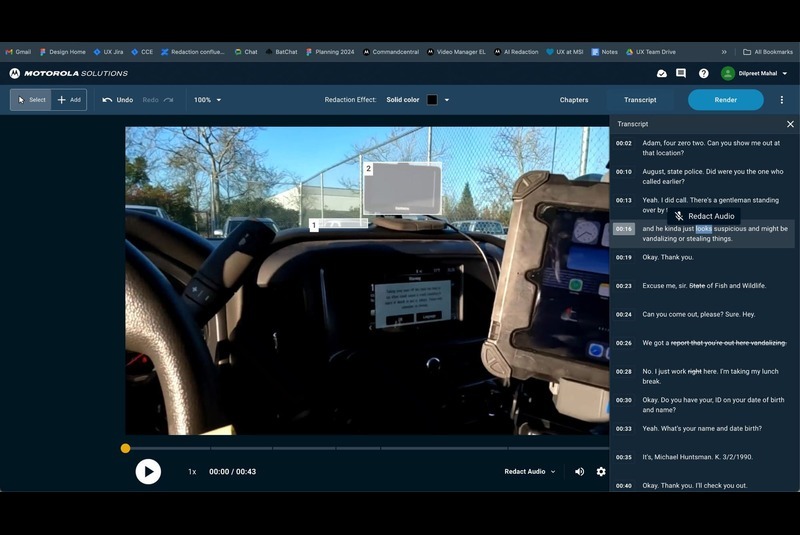
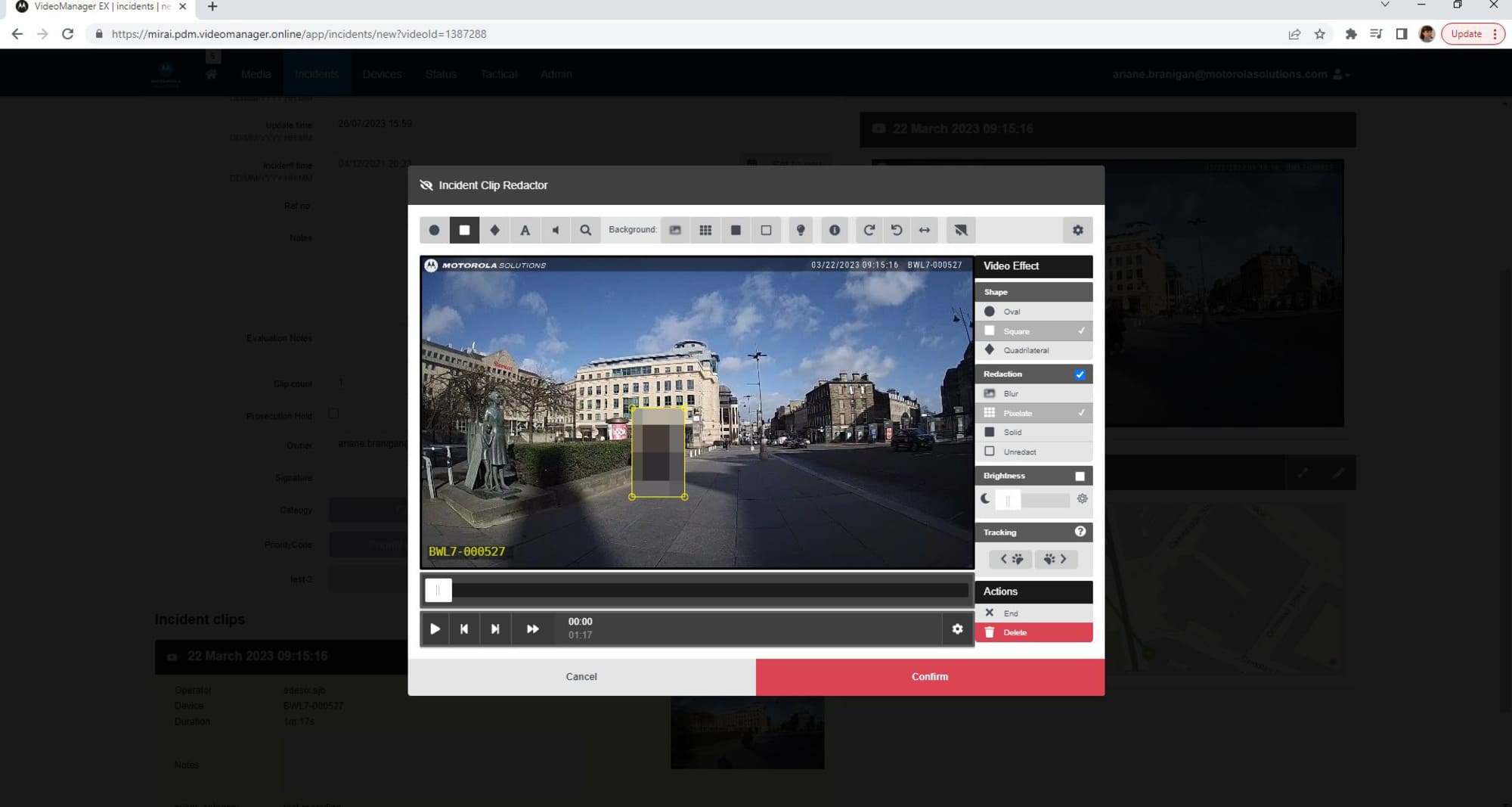
This is where Motorola Solutions AI video redaction and Motorola Solutions cloud-based video redaction features do the heavy lifting. Built specifically for public safety, these tools speed up demanding tasks while keeping human experts in total control. Inside VideoManager, the software automatically suggests redactions at high speed so your team can focus on making final decisions instead of doing manual labor.
Court scrutiny demands total transparency in how evidence is edited. Unchecked 'black box' AI tools that alter footage without oversight introduce serious legal risks during trial. Public safety calls for technology assisted by AI, but verified by human decision-makers. Smart algorithms quickly detect faces, license plates, and sensitive audio for an officer to confirm — ensuring your evidence stands up in court while audit logs track every change.
Protecting evidential integrity: Simple, tamper-proof security via privacy-first video redaction systems
Proving evidence is authentic while redacting private information is the ultimate test for any system. Your software must protect the raw recording while proving it hasn't been altered.
Digital fingerprints (SHA-256 Hashes)
The moment a video is offloaded, the system creates a unique digital fingerprint (known as a SHA-256 hash) for the raw file. Whenever the video is opened or shared, the system verifies this fingerprint to prove the original footage hasn't been modified or corrupted.
Non-destructive editing
Modern redaction software uses non-destructive editing. Instead of drawing blurs directly onto your original video and overwriting it, all blurs and audio mutes are stored in a separate, secure file alongside the video (called a sidecar file).
-
Raw footage stays untouched: Your master video file remains completely original, preserving raw evidence if a judge or defense lawyer needs to see it.
-
Clean disclosure exports: When sharing footage with prosecutors or the public, the software applies the sidecar edits to create a new, redacted copy while your master file stays safe.
Tamper-evident audit trails
Every action—from initial AI detection to manual adjustments and file exports—is recorded in an automatic audit log. This log tracks officer IDs, timestamps, and specific edits, giving you a complete paper trail for court.
Step-by-step: How connected evidence processing works in practice
To see how modern video redaction software fits into daily public safety operations, it helps to walk through a typical incident from capture to court disclosure:
- Step 1: Automated Scene Capture & Metadata Tagging
An incident occurs in the field. When an officer activates their body camera or triggers a radio distress signal, recording begins. As soon as the officer returns to the station or connects over LTE/Wi-Fi, footage offloads into VideoManager DEMS. The system automatically tags the footage with the CAD incident reference and officer details via digital policing apps like Pronto. - Step 2: Instant Hash Generation (SHA-256)
At the exact second of ingestion, the system generates a unique cryptographic SHA-256 hash for the raw recording. This acts as a permanent, unalterable digital fingerprint, guaranteeing the original video remains authentic and uncorrupted throughout its lifecycle. - Step 3: Assistive AI Object Detection & Blur Proposals
The user initiates the redaction workflow inside VideoManagers AI capabilities.. AI algorithms scan the video track, identifying moving faces, license plates, device screens, and sensitive spoken audio. The software generates suggested blur masks and audio mutes across the timeline in minutes. - Step 4: Human-in-the-Loop Review & Fine-Tuning
A trained reviewer reviews the AI suggestions. They adjust mask boundaries, add custom mutes for sensitive medical chatter if necessary, and approve the final result. The original master footage stays untouched because all edits are stored in a separate, secure sidecar file. - Step 5: Tamper-Evident Export & Disclosure
The system burns the sidecar edits into a fresh, redacted copy for court disclosure or FOIA/DSAR release. Every step—who opened the file, what AI suggested, what the human reviewer changed, and when it was exported—is recorded in a tamper-evident audit log for complete legal disclosability.
Comparing legacy workflows against modern AI redaction
Here is how traditional desktop redaction compares to a modern, connected AI platform:
Buyer's checklist: 5 questions for public safety ICT leads
Before procuring or renewing a video redaction platform, procurement leads and ICT directors should ask vendors these five essential questions:
- Can we export our full evidence archive at any time without data egress fees or format conversion costs?
Why it matters: Avoid getting locked into a system where accessing or migrating your own video data triggers unexpected operational fees. - Can we move between cloud, hybrid, and on-premises deployment models without financial penalty?
Why it matters: Your IT strategy and data sovereignty rules may change; your software should adapt without cost barriers. - Does the AI operate on a human-in-the-loop model with a full, auditable account of every edit?
Why it matters: Autonomous AI edits can be challenged in court; human oversight backed by audit logs ensures court admissibility. - Does the platform integrate natively with our digital policing applications, CAD system, and mobile tools using open APIs?
Why it matters: Native integration eliminates duplicate data entry, saving officers hours of manual paperwork on every shift. - Are editing workflows non-destructive, preserving raw footage with cryptographic SHA-256 verification?
Why it matters: Protecting the original recording against tampering claims is vital for defending the chain of custody in court
Building the future of digital evidence
Redaction sits right at the center of privacy, speed, evidence integrity and public trust. Forward-thinking public safety agencies recognise this reality and turn a former operational bottleneck into a smooth efficient workflow..
The path forward is simple: view redaction as part of an open, connected setup, demand transparent AI that keeps skilled people in control and protect your data sovereignty so your evidence stays entirely yours to manage, share and defend.
As video volumes grow and regulations tighten across Europe, building on an open, connected foundation gives your team the speed, clarity, and confidence to meet disclosure demands every time.