Safer stations, safer trains, safer workers: The cornerstone of metro and rail efficiency
Introduction
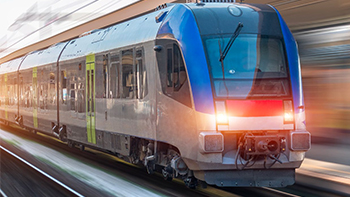
By 2050, global urbanisation will rise to 70%, adding 2 billion people to cities worldwide. This rapid urban growth presents a critical challenge for urban transportation networks. Already, traffic congestion in major cities costs drivers an average of 130 hours per year, road traffic deaths exceed 1.3 million annually, and over 90% of urban populations live below WHO health standards. These figures tell us an undeniable truth: Urban mobility systems need to become safer, more efficient, more reliable and sustainable.
Metro and rail systems offer the perfect solution for cities seeking improved mobility without worsening existing challenges. A single metro line can accommodate circa 70 times as many people as a city street filled with cars – emphasising their essential role in urban living. However, growing passenger demand, operational complexity, and the need for public trust make safety the backbone of successful operations. Keeping stations, trains, and workers safe isn’t optional; it’s non-negotiable.
Addressing safety challenges with a multi-faceted approach
Metro systems inherently operate in a high-stakes environment. Addressing their safety and efficiency challenges requires a focus on four key elements:
Fortifying station environments
Rail stations are bustling hubs that require diligent oversight to maintain order and safety. A safer station environment relies on comprehensive security and communication infrastructure. This includes fixed video security, access control, and smart sensors.
Ensuring train integrity and operational safety
The heart of metro and rail networks lies in the trains themselves. Ensuring a safer train involves advanced communication and monitoring systems. For instance, in-train video cameras and control systems provide real-time visibility, while mission-critical radio communications allow train operators to stay connected with the control centre and other personnel.
Empowering and protecting personnel
A safe workforce directly translates to a safer operating environment. Protecting metro employees boosts their confidence and allows them to perform optimally under pressure. This can be achieved through rugged mobile radios for reliable communication, body-worn cameras for accountability and evidence gathering, and broadband push-to-talk (PTT) solutions.
The central nervous system: the connected control centre
The control centre acts as the central nervous system, integrating data and communications from trains, stations, and workers. This includes integrated radio and video dispatch software, video management systems (VMS) with AI-driven analytics, and emergency and incident management software.
Future-proofing metro operations with innovation
Safety is an enduring commitment. The massive expansion of rail networks in the Asia-Pacific region alone highlights the need for continuous innovation. By 2035, over 90,000 kilometres of high-speed rail is projected to connect 15 countries in the region. Alongside this growth, there are opportunities for operators to implement trailblazing technologies, from AI-driven analytics to real-time emergency response tools.
To learn more about implementing advanced safety solutions and managing complexities in rail networks, book a consultation with our expert to discuss how our technology ecosystem can meet your needs.