
TABLE OF CONTENTS
loading...
Captain Chris Wetter has spent more than 30 years protecting Southampton Village, the East End Long Island community where he grew up, raised his kids and still meets his family at the beach after a long shift. As second in command, he helps lead a department of about 30 officers through some of the busiest seasons on the South Fork.
Southampton Village draws high-profile residents, world-class beaches and hosts major events, from road races and marathons to the United States (U.S.) Open golf tournament. Visitor numbers swell during the warmer months, bringing a steady stream of people. "To keep this community safe is important," Wetter said. "It is something I don't take lightly and something I'm honored to do."
The technology chain
Over the past five years, Wetter has embraced a mission to equip his officers with connected technology to help them stay safe and work smarter.
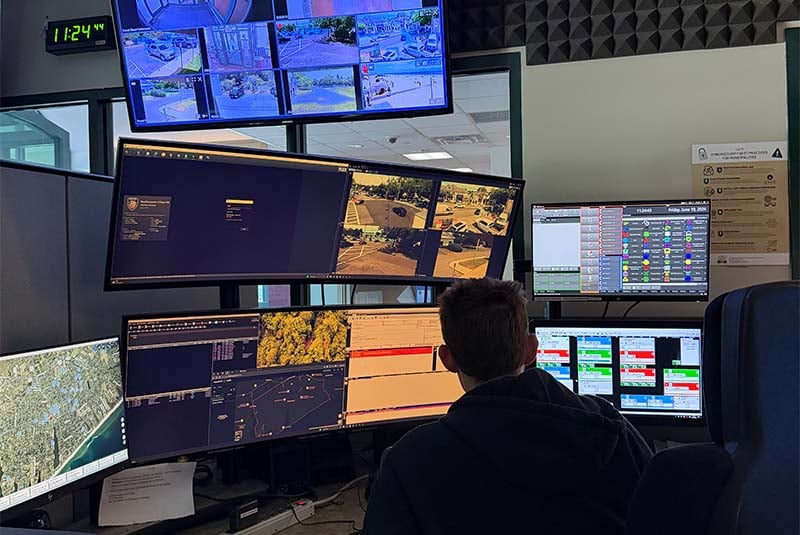
Wetter describes the department's technology as a chain that runs from the field all the way back to headquarters. Officers carry Motorola Solutions portable radios and capture evidence on body cameras and M500 in-car video systems. That information flows into Flex records management, CommandCentral Aware mapping, CommandCentral Digital Evidence Management (DEMS) and VehicleManager LPR — with both fixed cameras on poles and mobile readers in patrol cars — every day.
"What we have built is a powerful workflow to help us keep this community safe," Wetter said. "It's more capable and effective than any one product on its own. From responder photos to license plate hits to evidence sharing with the district attorney, every piece connects."
Solving the smash-and-grab
One of Wetter’s favorite stories is how license plate recognition helped crack a single case wide open — showing how valuable LPR can be.
"LPR is one of the most important tools we have," Wetter shared. Southampton hasn't faced the same public pushback as other communities, and Wetter credits that to one thing above all: trust.
Southampton runs its LPR program in the open. The village board supports it. The district attorney's office knows where every camera is located. Plus, Wetter keeps the door open to anyone with questions. "I always say to anybody that may have concerns: feel free to come in, sit down with me, and we'll have a discussion," he said. "We'll tell you how we use them." That openness covers where data goes, how it's stored and how long it's kept. The result is a community that views technology as an asset rather than a threat.
Earlier this year, a 9-1-1 call came in from a woman whose car window had been smashed in the Southampton Hospital parking lot. Her bag was gone, and so was property from other vehicles nearby.
Patrol officers and hospital security pulled footage from the lot's Avigilon Alta camera system, capturing the suspect and vehicle in clear detail. Those images were displayed on the CommandCentral Aware map and flowed straight into DEMS, giving detectives a solid description to work with. The problem? No license plate.
That's where VehicleManager proved its worth.
VehicleManager is Motorola Solutions' LPR platform. It includes AI-powered search capabilities and a real-time notification feature that alerts law enforcement when an LPR camera detects a vehicle on a hot list.
An officer turned to the VehicleManager (VM) Assist AI chat function and searched for a specific make and model seen in the village within the past hour or two. With VM Assist, officers describe a vehicle in plain language — such as a white SUV seen in a specific area within a given time window — and the system returns matching results. In the Southampton case, VM Assist helped officers identify the suspect vehicle without a known plate. The system returned several matches. Officers pinpointed the vehicle and pulled a plate. Then they set a VM Alert so the system would notify them the moment that vehicle returned.
Several months later, Wetter was running an errand with his daughter when an alert landed on his watch: the vehicle had reentered the village. He called the station. "The car involved in the hospital parking lot smash-and-grab just entered the village," he told the lieutenant. "Let patrol know and be on the lookout."
Within half an hour, officers located the vehicle in the business district. After a traffic stop and a consent search, they recovered bags, credit cards and wallets — proceeds from a string of thefts. The case cleared five, six — seven additional incidents, some outside Southampton's jurisdiction. Detectives went on to collaborate with the neighboring police departments on several of them.
How license plate recognition helps change policing for the better
Wetter remembers what a case like this looked like 25 to 30 years ago. The answer is sobering. "It was always reactionary and report taking," he said. "You were lucky back then to come across someone in the act of stealing." Without real-time tools, this investigation would have meant taking more reports as more victims came forward and hoping to stumble on the suspect by chance.
Today, LPR lets officers connect the dots, place a vehicle in time and location and act before the next crime happens. "This technology helps us take intelligent steps to close incidents faster," Wetter said. "For a younger, tech-savvy generation of officers, these tools are a daily advantage."
For departments worried about how their councils or communities might react, Wetter's guidance is direct: educate and demonstrate.
"Be forthcoming, be transparent, let everybody know," he said. He encourages agencies to show elected officials exactly how these systems protect the public — from pinpointing when a vehicle fled the area to identifying how long a suspect vehicle was in town. "Show them the proof. This is how we use them. This is what we've done with them."
The ecosystem working as it should
The Southampton smash-and-grab case stands as proof that a connected ecosystem delivers more than the sum of its parts. Officers in the field, evidence management at headquarters, license plate intelligence and seamless sharing with prosecutors all came together to bring closure to victims and accountability to a suspect.
"It's proof that it works," Wetter said. "It keeps this community safe. It helps us do our job."
His pride lies not in the tools alone, but in what they mean for the officers who follow him and for the community he's spent a career protecting — with technology built to grow alongside both.
Deploy LPR camera systems
Discover how our high-performance license plate recognition camera systems capture clear data to protect your streets.