
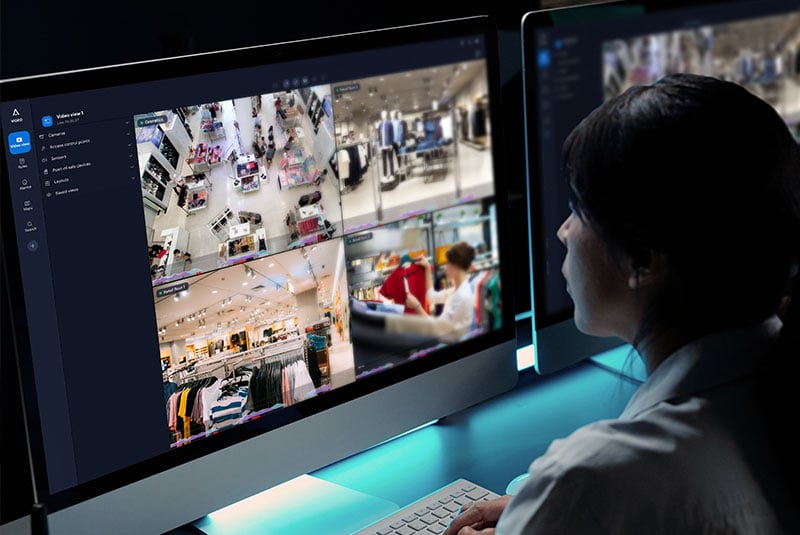
Retailers face growing pressure to protect inventory, employees and profits in an increasingly complex security environment. Shoplifting, organized retail crime, employee theft, administrative errors and supply chain disruptions can all contribute to significant financial losses.
For many retailers, shrinkage is no longer an isolated operational issue, it has become a major business challenge that impacts profitability, employee safety and customer experience. Modern retail loss prevention requires more than simply placing cameras in stores. Today’s retailers need layered strategies that combine people, processes and technology to reduce preventable loss and improve operational visibility.
From employee training and communication systems to AI-powered surveillance and inventory management tools, retailers are increasingly adopting integrated approaches to improve store security and reduce shrinkage.
Understanding how loss prevention works and implementing proactive strategies can help retailers create safer, more efficient and more profitable store environments.
What is loss prevention?
Loss prevention refers to the strategies, policies and technologies retailers use to reduce preventable losses and protect inventory, employees and business operations. In retail environments, loss prevention focuses primarily on reducing shrinkage. Retail shrinkage occurs when inventory is lost due to causes other than completed sales.
These losses can come from both external and internal sources, including theft, fraud, administrative mistakes and operational issues.
Retail loss prevention programs are designed to:
- Reduce theft and fraud
- Improve inventory accuracy
- Protect employees and customers
- Strengthen operational visibility
- Support safer store environments
- Preserve profitability
As retail environments become more complex, many organizations are expanding their loss prevention strategies to address evolving security challenges such as organized retail crime, self-checkout abuse and supply chain disruptions.
Discover our retail solutions
Designed for retail, our cameras and smart sensors help maintain safety, deter theft and put customers first.
-
Enhance protection for your property
-
Optimize your loss prevention strategy
-
Keep staff and customers safe
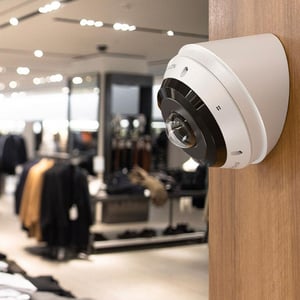
Why loss prevention is important in retail
Retail loss prevention is about more than reducing theft. Effective loss prevention strategies can improve operational efficiency, strengthen employee safety and support better customer experiences.
Protecting profitability
Shrinkage directly impacts a retailer’s bottom line. Even relatively small losses can accumulate over time and significantly reduce profitability. In competitive retail environments with tight margins, inventory loss can create serious financial challenges.
Reducing shrinkage helps retailers:
- Preserve revenue
- Improve inventory accuracy
- Reduce operational waste
- Improve forecasting
- Support long-term profitability
Improving employee safety
Retail theft incidents can quickly escalate into safety concerns for employees. Organized retail crime and aggressive theft behavior may place retail workers in dangerous situations. Providing employees with clear procedures and reliable communication tools can help improve situational awareness and support safer responses.
Many retailers now focus on:
- De-escalation training
- Emergency communication systems
- Panic alert tools
- Coordinated incident response procedures
Improving employee safety is an important part of any retail loss prevention strategy.
Enhancing customer experience
Loss prevention can also improve the overall customer experience. Retailers that maintain accurate inventory levels and organized store environments are better positioned to:
- Reduce stockouts
- Improve product availability
- Create safer shopping environments
- Minimize operational disruptions
Customers are more likely to return to stores that feel secure, organized and well-managed.
Supporting operational visibility
Modern loss prevention strategies provide retailers with valuable operational insights. Analytics platforms, monitoring systems and inventory reporting tools can help organizations:
- Identify theft trends
- Detect operational inefficiencies
- Improve staffing decisions
- Monitor high-risk areas
- Support data-driven decision-making
Improved operational visibility allows retailers to proactively address security risks before they escalate.
Reducing legal and reputational risks
Proper documentation and incident reporting procedures can help protect retailers from legal and reputational challenges. Maintaining video evidence, incident reports and operational records may support:
- Insurance claims
- Internal investigations
- Law enforcement collaboration
- Workplace safety documentation
- Liability reduction
Retailers that respond consistently and professionally to incidents are often better positioned to protect both employees and brand reputation.
What causes shrinkage in retail?
Retail shrinkage occurs when a company loses inventory from causes other than sales. Retailers can be victims of shrinkage because of:
- Shoplifting: Shoplifting contributes significantly to retail shrinkage, accounting for around 36% of total losses experienced by retail businesses. Shoplifting involves customers unlawfully taking merchandise without payment, using techniques like concealing items, using distractions, and tampering with packaging.
- Employee theft: Employee theft is the second highest contributor to shrinkage, clocking in at 29% of all loss for retail stores.
- Administrative errors: Administrative errors, including process and control errors, account for approximately 27% of all retail shrinkage. Unlike the first two which typically occur in-store, administrative errors can occur as early as in the warehouse and have a significant impact on inventory loss.
- Operational loss: Operational losses can occur in day-to-day operations due to various factors. This includes instances where products break, expire or are affected by disruptions in the supply chain.
- Vendor fraud: Vendor fraud can account for upwards of 5% of retail shrinkage. This type of fraud typically comes in two forms: check tampering and billing schemes, or theft occurring during inventory delivery to stores.

Learn more
Retail body cameras
Prevent retail crime in your stores with real-time insights and exceptional video quality.
Learn more
Learn more
Curve two-way radio
With Wi-Fi-enabled features and a convenient management system the Curve helps your team stay in touch and remain productive.
Learn more
Learn more
Video security
Quickly identify and analyze potential risks, so you can respond to and resolve effectively.
Learn more
Retail loss prevention strategies
Effective retail loss prevention requires a layered approach that combines employee training, operational procedures and security technology. No single solution can eliminate shrinkage entirely. Instead, retailers should develop comprehensive strategies designed to reduce vulnerabilities across the business.
Staff training and clear procedures
Employees are one of the most important components of any retail loss prevention strategy. Well-trained staff members are often better equipped to recognize suspicious activity, follow reporting procedures and respond appropriately during incidents.
Retailers should provide employees with training on:
- Theft recognition
- De-escalation techniques
- Refund and return procedures
- Emergency response workflows
Clear policies and consistent operational procedures can also help reduce administrative errors and improve accountability.
AI surveillance technology and video analytics
Many retailers are adopting AI-powered surveillance technology to improve visibility and strengthen loss prevention efforts.
Modern video security systems can provide:
- Real-time alerts
- Behavioral analytics
- Motion detection
- Suspicious activity identification
- Automated incident detection
AI analytics can help retailers identify patterns and monitor high-risk areas more efficiently. These systems may also improve investigations by allowing security teams to review incidents more quickly and accurately.
Improve store layout and visibility
Store layout plays a major role in retail security. Poor visibility and cluttered environments can create opportunities for theft and make it more difficult for employees to monitor customer activity.
Retailers can improve store security by:
- Reducing blind spots
- Improving lighting
- Positioning high-value items strategically
- Maintaining clear sightlines
- Optimizing checkout placement
Thoughtful store design can help deter theft while improving operational efficiency.
Use access control and security devices
Physical security tools remain an important part of retail loss prevention.
Retailers may use:
- Electronic article surveillance (EAS) systems
- Locked product displays
- Access control systems
- Smart sensors
- Security gates
- Alarm systems
These tools can help deter theft while improving inventory protection in high-risk areas.
Strengthen employee communication
Fast communication is essential during retail incidents. Employees need reliable ways to communicate suspicious activity, request assistance and coordinate responses.
Many retailers use communication tools such as:
- Two-way radios
- Mobile communication platforms
- Panic alerts
- Push-to-talk devices
- Emergency notification systems
Improved communication can help reduce response times and improve employee safety.
Keep teams informed and empowered
Give employees the answers they need so they can handle customer requests, stock inquiries or task updates.
- Rapid employee communication
- Consistent staff collaboration
- Accelerated omnichannel growth

Conduct regular inventory audits
Routine inventory audits help retailers identify discrepancies and improve operational accuracy.
Retailers may conduct:
- Cycle counts
- Spot checks
- Exception reporting reviews
- Inventory reconciliation
- Product movement tracking
Regular audits can help organizations detect theft patterns and operational issues before losses increase.
Document incidents and analyze trends
Incident documentation is critical for both investigations and long-term loss prevention planning.
Retailers should maintain records related to:
-
Theft incidents
-
Employee reports
-
Video evidence
-
Operational disruptions
-
Repeat offender activity
Analyzing incident data can help retailers identify patterns and allocate security resources more effectively.
Build a comprehensive loss prevention policy
Every retailer should maintain a clear and consistent loss prevention policy.
Policies should define:
- Employee responsibilities
- Reporting procedures
- Escalation workflows
- Safety protocols
- Investigation processes
- Inventory handling standards
Documented policies help create consistency across operations while supporting employee accountability.
Help protect your store today
Retail loss prevention is no longer limited to catching shoplifters or monitoring surveillance footage. Today’s retailers face increasingly complex challenges that require proactive and integrated security strategies.
Reducing shrinkage requires a combination of employee training, operational visibility, communication systems and advanced security technology. Retailers that adopt layered loss prevention approaches are often better positioned to protect inventory, improve employee safety and support long-term profitability.
As retail environments continue to evolve, organizations increasingly rely on intelligent analytics, communication platforms and modern monitoring systems to strengthen operational resilience and improve incident response. Implementing loss prevention solutions such as radios, retail body cameras and video surveillance that meet the needs of your retail location can offer both protection and peace of mind.
By combining people, processes and technology, retailers can build stronger loss prevention programs that support safer and more efficient store operations.