
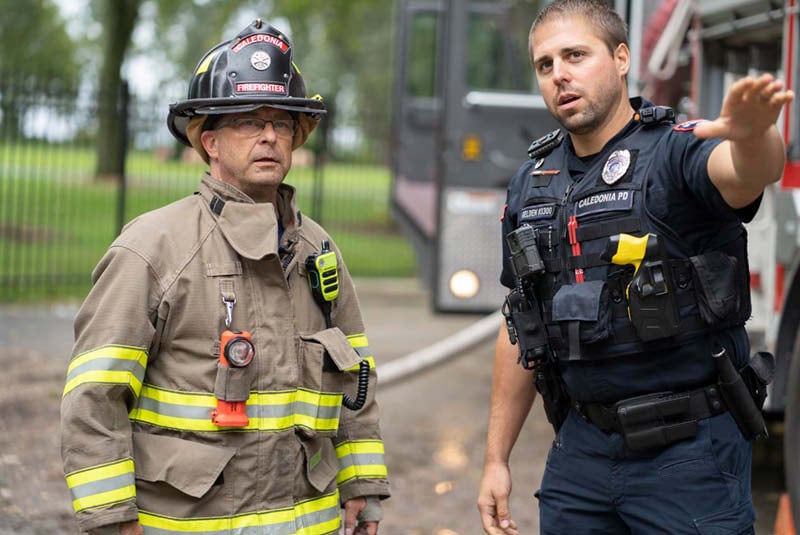
When an emergency incident strikes, multi-agency coordination can quickly become overwhelming without a unified framework in place. The Incident Command System (ICS) provides a clear, standardized structure designed to streamline leadership, communication and resource management across public safety organizations.
This guide breaks down the essential features, core roles and key benefits of ICS to help your team maintain operations and resilience when it matters most.
What is the Incident Command System?
The Incident Command System (ICS) is a standardized operational incident management structure for emergency response in the U.S. It is built to streamline command, resource management and communication across agencies.
Instead of operating separately during critical events, organizations can use ICS to establish a clear structure and hierarchy, shared jargon and consistent protocols. As a key feature of the U.S. National Incident Management System (NIMS), this framework ensures alignment across departments whether managing a minor crisis or planning and overseeing a complex operation.
This framework came to be following catastrophic California wildfires in the 1970s. While teams could fight the blazes, post-incident audits revealed that the heavy loss of life and land stemmed from systematic faults. This included incompatible radio channels, conflicting leadership structures, poor sharing of intelligence and mismanaged resources. In response, public safety leaders designed ICS systems to eliminate these operational blocks and create consistent efforts.
While ICS was initially designed for fire services, it has since been adopted across public safety agencies, healthcare networks, municipality departments and even corporate security teams. Today, its structured leadership applies beyond just emergency situations, being used to mitigate risks and streamline logistics for any type of event. ICS can be used for anything from natural disasters or active threats to large sporting events, music festivals and even multi-departmental training exercises.
Manage disruptions effectively
Proactively anticipate, withstand and recover from disruptions and help protect your people, operations and reputation.
-
Identify services and map dependencies
-
Manage teams from a single platform
-
Centralize data and automate alerts

Incident Command System structure
The incident command structure is organized into five functional sections, each handling a critical aspect of emergency response and management.
Command
The command tier serves as the central leadership engine of the Incident Command System, defining the incident goals and operational period objectives.
Positioned at the top of the command hierarchy, this leadership unit is led by the Incident Commander and supported by the Safety Officer, Public Information Officer, Senior Liaison and Senior advisors, who all work to ensure strategic oversight before delegating execution to the following supporting tiers.
Operations
The Operations tier serves as the tactical section of the ICS, responsible for establishing strategy and specific actions required to achieve the primary objectives set by Command. They are then in charge of coordinating and executing strategy and tactics to achieve the response objectives.
Logistics
The Logistics tier provides the operational support and resource foundation for the ICS, ensuring Command and Operations have the personnel, equipment and materials necessary to carry out their response. This section also performs the technical activities required to maintain the function of operational facilities and processes.
Planning
The Planning tier serves as the analytical core of the ICS, responsible for coordinating support activities for incident planning and contingency, long-range and demobilization planning. It supports Command and Operations in processing incident information and coordinates activities across the response system.
Admin/Finance
The Admin/Finance tier manages the regulatory, financial and administrative foundation of the ICS, supporting both Command and Operations throughout the response. It tracks and processes incident expenses, including licensure requirements, regulatory compliance and financial accounting.
Core features of ICS
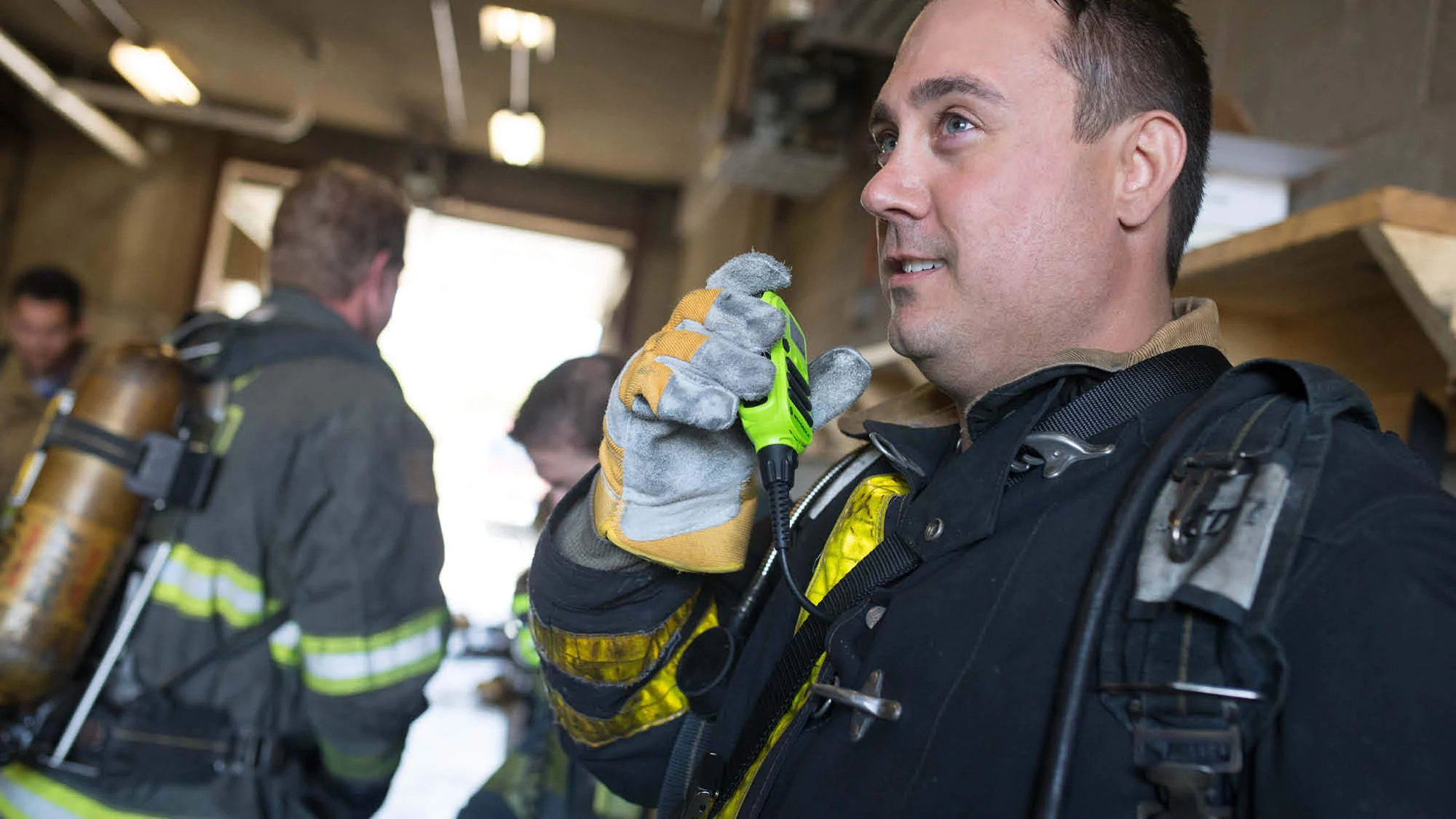
The Incident Command System is built around 14 core features grouped into six primary categories: standardization, command structure, operational planning, resource and facility management, communications and information handling and professionalism.
Standardization
- Common terminology: Helps to define organizational functions, resources, facilities and positions without confusion.
Command
- Establishment and transfer of command: Command must be clearly established from the beginning of an incident. It should also be transferred through a formal process, including a briefing that captures all necessary information for safe and effective operations.
- Unified command: Allows agencies with different legal, geographic and functional responsibilities to work together without affecting individual agency authority, responsibility or accountability.
- Management by objectives: Establishes overarching incident objectives, then develops strategies based on those objectives and executes tactical activities to accomplish goals while documenting results.
Planning and organizational structure
- Modular organization: Develops top-down based on the size and complexity of the incident, as well as the state of the environment post-incident.
- Incident action planning: Guides response activities using plans that state operational period objectives and tactics.
- Manageable span of control: Limits the number of direct reports per supervisor to between three to seven to maintain efficient supervision.
- Incident locations and facilities: Established designated areas including an incident command post, staging areas and bases to support incident operations.
Facilities and resources:
- Comprehensive resource management: Maintains an accurate, up-to-date inventory and status of all personnel, equipment, teams and facilities assigned to an incident.
- Integrated communications: Develops an integrated communications plan to connect all response components and agencies.
Communications and information management:
- Information and intelligence management: Establishes a process to collect, analyze, assess, share and manage information and intelligence related to a specific incident.
- Accountability: Ensures certain procedures are followed including check-in protocols, incident action plans, unity of command, span of control and resource tracking during an incident response.
Professionalism:
- Dispatch/deployment: Requires resources to respond only when officially requested or dispatched by an authorized authority.
Build a resilient business
Learn how to build enterprise resilience across key lifecycle phases and choose the right software platform.
-
Discover what enterprise resilience is
-
Explore the power of a unified platform
-
Checklist to help you choose a solution

Key benefits of ICS
Implementing an Incident Command System transforms how organizations navigate high-stakes situations. By replacing chaos with structured leadership and seamless communication, an ICS system ensures that teams can act swiftly, protect personnel and maintain operational continuity when crisis strikes.
- Standardized operations: Established common terminology and clear organizational structures across multiple agencies.
- Clear communication: Eliminates miscommunication and confusion during critical incident response.
- Scalability: Structure can expand or contract based on different factors, including the size, severity and complexity of an event.
- Flexibility: Can effectively apply to a variety of situations, from emergency response to planned community events and simply daily operations.
- Streamlined resources: Consolidates personnel, equipment and facility tracking into a unified management framework.
- Efficient information management: Enhances joint planning, knowledge sharing and overall operational safety.
Incident Command System roles and responsibilities
The Incident Command System defines clear roles and responsibilities to ensure structured leadership, communication and operational management during an incident response.
Incident Commander
The responsibilities of an Incident Commander include:
- Control of the overall management of the incident, assessing the situation and obtaining a briefing from the previous incident commander when applicable.
- They determine the overarching objectives and strategy of the incident. They establish immediate priorities, set up the incident command center and build an appropriate operational organization.
- Scheduling planning meetings, authorizing and approving the incident action plan and ensuring safety measures remain in place throughout operations.
- Coordinates activities for all command and general staff, liaises with key officials and manages resource requests or releases as needed.
- Keep the policy group informed of incident status, approve auxiliary personnel, authorize news media releases and order incident demobilization when appropriate.
Public Information Officer
As a Public Information Officer, their key responsibilities are:
- Verifies, coordinates and disseminates accurate, accessible and timely information on the incident’s cause, size and current situation for both internal and external audiences.
- Gather essential details directly from the incident command center, response teams and expert technical sources, including emergency response guidebooks and partner agencies.
- Responsible for verifying all information by consulting with the Incident Commander, technical specialists and the incident command system team.
- Manage the distribution of updates internally to response units and externally to key stakeholders, news media and the public.
Safety Officer
In their role as a Safety Officer, they are:
- Responsible for identifying and mitigating hazardous situations across the incident area and ensuring that all necessary safety messages and briefings are communicated effectively.
- Given the emergency authority to immediately stop and prevent unsafe acts and review the incident action plan for any safety implications.
- In charge of assigning qualified assistants to evaluate special hazards, initiates preliminary investigations into accidents within the incident area, reviews and approves the medical plan and actively participates in planning meetings to maintain operational safety.
Liaison Officer
Liaison Officers perform a variety of duties, including:
- Acting as the primary point of contact with representatives from assisting and cooperating agencies. They maintain a comprehensive list of these organizations and assist in establishing interagency contacts throughout the response.
- Monitoring incident operations to identify current or potential issues and securing smooth cooperation across all entities.
- Participating in planning meetings to provide resource status updates, including agency capabilities and limitations, as well as specific demobilization requirements.
Operations Controller
Key responsibilities of Operations Controllers include:
- Directly managing tactical operations, collaborating with lower-level personnel to develop the operations portion of the incident action plan and requesting necessary resources.
- Supervising the execution of the plan, maintaining close communication with field teams and the Incident Commander while ensuring safe execution.
- Make or approve plan adjustments during operational periods, request additional support, approve resource releases and maintain the activity log.
Planning Controller
The responsibilities of a Planning Controller are:
- Overseeing the collection, evaluation, processing and dissemination of situation information required for incident management. They supervise the preparation of the incident action plan and provide critical input to the Incident Commander.
- Establishing reporting schedules, identifying specialized resource needs, evaluating alternative strategies and delivering periodic predictions regarding incident potential and significant status changes.
- Managing staff reassignments, assembling strike teams, overseeing demobilization planning, integrating supporting plans and maintaining the activity log.
Logistics Controller
Logistics Controllers typically:
- Support overall incident response by securing personnel, equipment, facilities and essential services required for operational resolution.
- Manage personnel deployment, assemble volunteer teams, establish critical incident kits and coordinate the distribution of supplies across response sites.
- Establish and oversee the communications center to facilitate seamless interaction and connection among incident responders.
Finance/Administration Controller
The key responsibilities for this position include:
- Managing all financial and administrative aspects of an incident, establishing an operational section plan and delivering ongoing cost analysis to leadership.
- Working with participating agency representatives, fulfill supply and support needs, maintain daily communication with headquarters and evaluate the necessity of an incident commissary.
- Ensuring all personnel accurately complete and transmit time records according to organizational policy and provide key financial data for demobilization planning.
Ready to strengthen your operational resilience?
Implementing an Incident Command System (ICS) gives your organization a clear, scalable framework to manage emergencies and complex operations with confidence. By standardizing roles, terminology and leadership structures, ICS enables seamless collaboration when every second counts.
Connect with our specialists today to build a tailored ICS framework built for your specific needs.