
Trusted by 100,000+ organizations globally








Key takeaways:
- Access control technology: A gym access system helps secure your facility while creating a seamless experience for members and staff.
- Gym security: Modern gym entry systems integrate with membership software to automate check-ins, grant or revoke access and reduce administrative work.
- Types of access control: Mobile credentials, key fobs, key cards, PINs and biometric authentication each offer different levels of security, convenience and cost.
- The best access control solutions for gyms: Cloud-based systems with remote management, real-time monitoring and software integrations are becoming the preferred choice for many fitness businesses.
Running a successful gym today requires more than quality equipment and knowledgeable staff. Members expect convenient access, flexible operating hours and a safe environment every time they visit. A modern gym access control system combines physical security measures with operational efficiency by ensuring only authorized members, staff and visitors can enter designated areas.
Whether you operate a boutique fitness studio, a multi-location franchise or a fully automated 24-hour facility, the right access solution can improve security, simplify member management and enhance the overall customer experience.
Why gym security matters
Many gyms still rely on manual check-ins or standalone membership software. While functional, these methods often create unnecessary administrative work and leave security gaps. These systems are vulnerable to common threats, including tailgating or "piggybacking" where unauthorized individuals follow members through the door, or theft of valuable fitness equipment or personal belongings from locker rooms. A modern gym check-in system helps combat these concerns by connecting member credentials with door access, automatically verifying memberships before granting entry.
For facilities operating extended hours, a check-in system for gym environments becomes even more valuable by allowing members to enter safely without requiring onsite staff. Instead of traditional keys or unlocked doors, members authenticate using approved credentials such as: mobile credentials or key/card fobs.
The system verifies the credential against membership records before unlocking the door. Modern gym door access systems often integrate directly with membership management software, allowing access permissions to update automatically whenever memberships change.
Benefits of modern gym access control
Implementing access control for gyms offers advantages beyond physical security.
 Improved security
Manages member access, reducing unauthorized entry and protecting valuable equipment. Flexible security integrations add an extra layer of visibility.
Better member experience
Members enjoy quick, convenient entry without waiting at reception.
Support for 24/7 operations
A 24-hour gym access system allows members to access the facility safely even when staff aren't present.
Automated membership management
Access permissions automatically update when memberships begin, expire or are suspended.
Reduced administrative work
Automated credential management and accurate attendance recording saves staff time on reporting and administrative tasks, while minimizing errors.
Secure and seamless gym access
Modernize your fitness facility with a cloud-native, mobile-first access solution designed for 24/7 gym operations.
-
Touchless Wave-to-Unlock entry
-
Cloud-based remote management
-
Automated membership verification

What is gym access control?
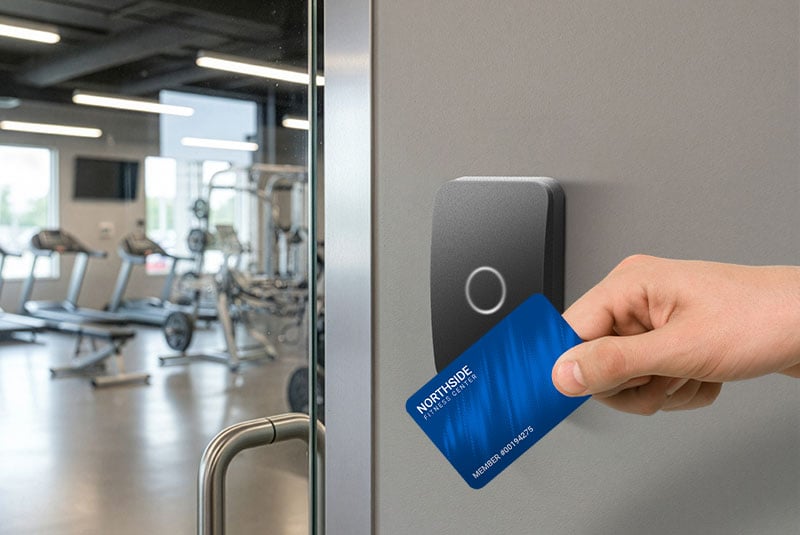
A gym access control system is a security solution that regulates who can enter your fitness facility and when they can access specific areas. Instead of traditional keys or unlocked doors, members authenticate using approved credentials such as PIN codes and key cards or fobs.
The system verifies the credential against membership records before unlocking the door. Modern gym door access systems often integrate directly with membership management software, allowing access permissions to update automatically whenever memberships change.
Key components of a gym access control system
Although systems vary, most gym access systems include several core components.
Access credentials
The digital or physical credential members use to enter the building.
Door readers
Installed near entrances, readers verify credentials before unlocking the door.
Electronic locks
A secure gym door lock system electronically unlocks once access is approved.
Software
The central access control platform manages users, permissions, schedules and activity logs. Cloud-based software also enables remote administration from virtually anywhere.
Membership software integration
Many organizations choose gym software with door access integration so member status automatically determines access permissions.
Monitoring and reporting
Administrators can monitor activity in real time while reviewing historical entry data for auditing and operational insights.
Common gym access credential types
Different facilities have different operational needs. The right credential depends on your security requirements, budget and member expectations.
Mobile credentials
Members use a smartphone app or digital wallet credential to unlock doors.
Best for:
- Modern fitness clubs and multi-location gyms
- Premium member experiences
Advantages:
- Easy credential management
- Remote issuance with no physical cards
Considerations:
- Requires technology
- May require internet connectivity during setup
Key fobs
A gym key fob system uses small RFID-enabled fobs instead of cards. Members simply tap the reader.
Best for:
- 24-hour gyms
- Boutique fitness studios and membership clubs
Advantages:
- Durable
- Compact and easy to carry
Considerations:
- Replacement required if lost or damaged
PIN codes
Members enter a unique code using a keypad.
Best for:
- Temporary access
- Staff-only areas
Advantages:
- Low hardware costs
- No physical credential required
Considerations:
- Codes can be shared
- Lower security than credential-based systems
QR codes
Temporary digital codes displayed on mobile devices.
Best for:
- Guest passes and trial memberships
- Events
Advantages:
- Easy to issue
- Good for short-term access
Considerations:
- Less suitable for permanent memberships
Biometric authentication
Fingerprint or facial recognition verifies identity.
Best for:
- High-security facilities
- Premium fitness centers
Advantages:
- Cannot be forgotten
- Strong identity verification
Considerations:
- Higher upfront costs
- Privacy and compliance considerations
How to choose the right gym access control system
Every fitness facility has different operational priorities. Follow these steps when evaluating potential solutions.
1. Evaluate your security risks
Consider:
- Number of entrances
- Staffed versus unstaffed hours
- Member volume
2. Consider your operating hours
Facilities operating around the clock require more than a standard gym door entry system. A reliable 24/7 gym access system should include:
- Remote administration and real-time activity monitoring
- Automatic lock schedules
- Reliable backup power
For facilities with no overnight staff, 24/7 gym access control systems become a critical part of overall business operations.
3. Prioritize member experience
Members increasingly expect frictionless entry. Look for solutions that support:
- Touchless authentication
- Fast check-ins
- Self-service enrollment and automated credential management
Reducing wait times can improve first impressions while encouraging long-term member satisfaction.
4. Ensure software integration
The best membership entry system integrates directly with:
- Membership management software and billing platforms
- Video security
- Alarm systems
Integrated platforms reduce duplicate data entry while improving operational efficiency.
5. Plan for future growth
If you expect to expand locations or increase membership, choose a scalable system. Cloud-based platforms typically make it easier to:
- Add new doors
- Manage multiple sites
- Centralize reporting
Best practices for gym access control
Technology alone isn't enough. Successful deployments also depend on thoughtful policies and ongoing maintenance.
Protect member data
Regularly review user permissions
Maintain hardware
Train staff
Integrate with video security
Conclusion
Today's fitness facilities require more than traditional locks and manual check-ins. A modern gym access control system helps protect members, secure valuable equipment, automate operations and support flexible business models, including fully staffed and unmanned 24-hour gyms.
Whether you're replacing aging infrastructure or opening a new location, selecting the right gym door access system starts with understanding your operational goals, member expectations and security requirements. By investing in a scalable solution that integrates with your existing technology, you can improve both security and the overall member experience while positioning your business for future growth.
Frequently Asked Questions