
Key takeaways
- Badge systems authenticate users by matching information to a reader, granting or denying access.
- A complete system includes badges, card readers, door hardware and management software.
- Badge systems enhance building security, automate timekeeping, simplify management and easily scale.
- There are trade-offs that come with badges as they ensure secure entry daily, but carry risks.
- Motorola Solutions is a leading provider of cloud and on-premise badge access systems.
What is a badge access control system?
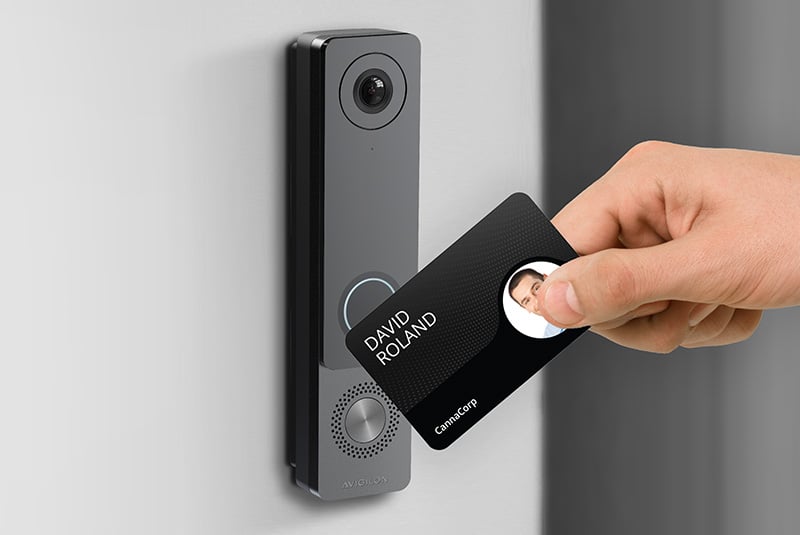
A badge access control system is a security measure that grants or restricts access depending on credentials and regulates who enters specific locations. It uses ID badge cards, usually including a person’s photo, name or individual identification number, along with a way for the cardholder to activate electronic readers.
How do employee ID badges work?
Employee ID badges work by having the employee hold up or swipe their access control badge on the electronic reader. Access badges commonly use RFID, proximity card access control or magnetic stripe technology to authenticate users.
The badge system for employees reads data to verify if the person is authorized to access a specific building or area. If it confirms the employee is authorized, the door unlocks for them to enter.
Benefits and applications of employee badge systems

By deploying a badge access control system, employees, leadership and organizations as a whole can experience several benefits, including:
- Improved security: The system allows only authorized people to enter restricted areas and stops intruders from gaining access, which boosts security.
- Detailed records and visibility: All access events and badge usage are recorded, allowing managers to be informed on who entered what area and go back to see when specific entry points were accessed, as well as who they were accessed by.
- Efficiency: Reduce manual entry and tracking tasks with badge scanning, allowing staff to focus on higher-value priorities.
- Scalability and integration: Businesses can easily add users and modify access as roles and needs change, while also smoothly integrating with existing security systems.
- User convenience: An employee badge system offers enhanced convenience by removing the need to manually input credentials at specified entry points.
To better understand how these advantages translate into daily operations, below are several key use cases where badge access control directly impacts workplace safety and organizational efficiency.
Observe safety and security
A badge system can alert managers of potential security breaches and issues in real time as it records failed access attempts. It also keeps a log of all daily entry events, making it easier to go back and trace unauthorized activity for investigatory purposes.
Resource and tool access
A single employee badge can go beyond security purposes by unifying physical building access with digital authentication for sensitive resources and tools such as computers, networks and printers.
Attendance tracking and timekeeping
These systems can help managers keep track of employee attendance. Access logs can help teams with scheduling and ensure accurate payroll processing, as the system tracks clock-in and clock-out times.
Components of a complete badge system
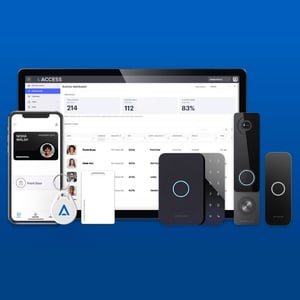
Complete badge systems are formed of several key components that work together to improve security, enhance user convenience and drive record-keeping. They include:
- Badges: Badges are used to identify an employee and are required to gain entry to secure locations. They contain the user’s name, a unique ID number and their specific security level that determines which secure areas they can access. This information is stored in the badges, usually within a chip or magnetic stripe that interacts with the readers.
- Card readers: A card reader is the technology that reads the information encoded in an employee's badge and determines if the individual can access the specific area they are trying to get into.
- Door hardware: The physical locking mechanisms that open or secure the door and can prevent unauthorized employees from gaining access. These door locks can be electronic or magnetic and are triggered by the badge reader system.
- Management software: The badging system software enables operators to centralize access control operations, helping them to manage events, grant and revoke credentials and create reports using detailed logs.
Drive safety with badge systems
Improve site safety with robust technology. Strengthen security with smart, integrated badge access control systems.
-
Touchless entry with keycards and more
-
Enhance security with encrypted badges
-
Simplified installation and integrations
Where should badge access systems be installed?
The most common types of organizations that need badge access systems include healthcare facilities, schools and universities, corporate offices, data centers, government buildings, fitness centers and more.
The most important areas within a facility that should have badge access points installed include:
- Main entry points: This includes access locations like front lobbies, employee-only side doors, parking garage gates and rear loading docks where staff, visitors and deliveries enter the building.
- Areas with sensitive information: This includes high-security zones, such as executive suites, HR offices, finance departments and legal archives where client data and confidential files might be stored.
- Critical technology infrastructure: IT server rooms, network closets, electrical rooms and more need to be protected from unauthorized access to safeguard against physical threats and accidents that may cause power outages.
- Hazardous and controlled-substance environments: This includes research laboratories, chemical storage rooms, medical supply closets and floors with heavy, dangerous machinery.
- Restricted staff-only areas: In order to prevent non-employees from entering rooms they shouldn’t be in, including employee breakrooms, management lounges, off-limits stairwells and shift-change stations.
Pros and cons
Every security solution comes with tradeoffs. To help you determine if physical badge access is the right choice for your workplace, it is important to consider both the pros and the cons, including:
|
Feature |
Pros |
Cons |
|---|---|---|
|
Convenience |
Allows authorized employees to access restricted spaces using a single tap card rather than having to remember codes or physical keys. |
Employees become dependent on carrying a physical item and cannot enter if it is forgotten, lost or damaged. |
|
Reliability |
Card readers provide consistent and instant access and rarely misread valid credentials. |
Physical badges can fail to read if damaged, and signal interference could prevent the system from recognizing a user. |
|
Price |
Initial hardware and installation costs are lower when compared to biometric access systems. |
Can get expensive over time, as maintaining stock of physical badges for all employees adds up quickly. |
|
Data |
Badges consolidate employee access information and rights onto a single chip. |
Older badge systems relying on outdated RFID technology are at risk of signal cloning and hacking. |
|
Dependability |
Systems operate 24/7 without human intervention, providing continuous physical security and automated door locking. |
Outages or unreliable power sources can shut down entry points because badge systems rely on power to function. |
Alternatives to badge access systems
To ensure badge access systems are the right security solution for your facility, it is important to compare them to these common alternatives:
Mobile credentials
Mobile credentials turn employees’ smartphones and wearables into secure access keys. Using Bluetooth or NFC technology, users can gain access to entry points with a tap or wave of their device.
Pros:
- Fewer lost credentials: Employees rarely forget their personal phones, while plastic badges can easily be misplaced, forgotten or broken.
- Multi-layered security: If an employee drops their badge, anyone can pick it up and gain access to the building. A phone requires a face ID, password or a fingerprint to unlock before gaining access.
Cons:
- Battery dependency: A dead smartphone battery can leave an employee locked out, while a plastic badge can never run out of power.
- Higher upgrade costs: Upgrading existing badge readers to Bluetooth readers has a higher upfront cost.
Biometrics
This type of access control uses facial scanners and fingerprint readers to grant access to employees, ensuring that only authorized individuals can enter high-security zones.
Pros:
- Impossible to share or steal: This eliminates the possibility of employees tapping badges for coworkers or unauthorized entry due to stolen badges.
- No credential management: Administrators never have to order, assign, print or replace physical badges.
Cons:
- Privacy concerns: Collecting facial scans or fingerprints can raise employee privacy concerns, unlike an anonymous badge ID number.
- Environmental limitations: In certain circumstances, like total darkness or rain, outdoor biometric readers may struggle to operate correctly, unlike badges that can work in almost any environment.
Keypads and PIN systems
Keypad systems require users to enter a numerical, memorized security code on a touchpad to unlock a door and gain access to a facility.
Pros:
- Lower operational costs: These are significantly cheaper to install and maintain than badge security systems.
- Nothing to carry: Employees don’t need to remember to bring a badge or carry a device, as they just need to memorize a code.
Cons:
- Higher security risk: PIN codes can easily be shared, written down, and overheard or overseen.
- Weaker tracking: If there is a single access PIN that is shared by staff, you cannot track which specific individual unlocked a door.
Video intercoms and visitor management systems
Video intercoms combined with visitor management technology allow teams to visually identify staff and guests before buzzing them in and allowing them access to the facility.
Pros:
- Ideal for visitors: Video intercoms allow for safe screening of guests before letting them in, while badges only work for permanent employees.
- Remote management: Door access can be managed from a distance or for multi-site facilities with no receptionist to physically hand out badges.
Cons:
- Less efficient: Visual verification can take time and cause congestion if used for full-time employee entry, as opposed to swiping a badge, which takes one second.
- Requires human intervention: Unless paired with advanced technology, someone is usually needed to answer the intercom to let a person in.
How to choose the right employee badge system provider
Selecting the right provider for your badge access system is important for long-term security and the operational efficiency of your organization. Here are key things to consider when evaluating which partner and system is right for you:
- Professional installation: Ensure certified integrators will be installing your system and that the provider is a trusted security business with a strong reputation.
- Data security: Look for a system that uses modern end-to-end encryption standards to help protect against cybersecurity threats.
- Comprehensive support and warranty: Choose a company that backs its hardware with multi-year warranties and replacement policies to help protect your investment.
- Total cost of ownership: Evaluate the costs beyond the initial setup by factoring in maintenance costs, subscription fees and upgrade charges.
- Post-installation support: Ensure the company offers support, whether that is to help troubleshoot when the system encounters an issue or provides training so that your team can use the system effectively.
Finding an employee or office badging system that fits these criteria can help transform your physical security into a seamless, automated solution. Motorola Solutions ticks each one of these boxes through its trusted access control technology.
By combining certified installer networks, enterprise-grade encryption, predictable long-term costs and dedicated support, Motorola Solutions delivers reliable systems that will help protect your facility today and fit your future needs.