
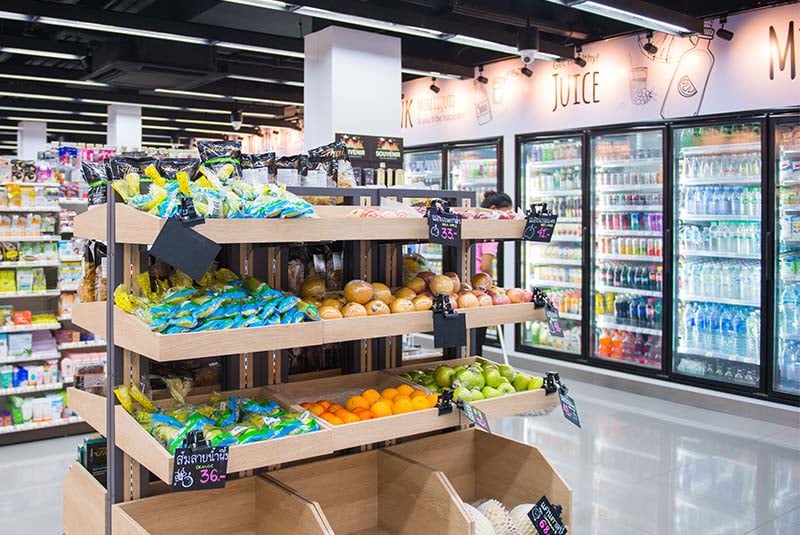
Convenience stores have always been built around one promise: helping customers get what they need quickly. But as shopper expectations evolve, that promise extends beyond speed. Today’s customers expect accurate inventory, personalized services, seamless checkout experiences and knowledgeable employees. Retailers on the other hand need to contend with labor shortages, rising operational costs and increasing competition.
To meet these demands, retailers are investing in convenience store technology that helps empower employees, streamline operations and create better customer experiences. From AI-powered analytics to real-time communication tools, technology helps stores become smarter, more efficient and more responsive.
In this blog, we’ll explore the biggest convenience store innovation trends shaping the industry and how retailers can leverage technology to improve operations, support frontline employees and drive long-term growth.
How convenience stores are evolving
The modern convenience store has transformed from a quick-stop destination into a neighborhood hub that offers everything from fresh food and coffee to parcel pickup, digital payments and even electric vehicle charging. As stores expand their offerings, operations become increasingly complex. Today’s leading convenience retailers are embracing digital transformation by connecting employees with the information and tools they need to make faster decisions. Rather than relying on overhead paging systems, radios or manual processes, they’re implementing technology that enables instant communication, real-time task management and operational visibility.
Theatro helps connect employees
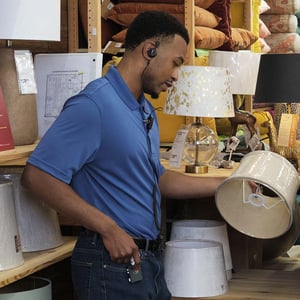
Theatro’s voice-powered wearable platform keeps employees connected without disrupting customer service. Key benefits include:
- Hands-free team communication
- AI-powered digital assistant for answers
- Real-time task management
How technology is reshaping convenience stores
Technology isn’t replacing employees, it’s helping them become more effective. The most successful retailers are investing in solutions that remove friction from daily operations, reduce manual work and enable employees to spend more time serving customers.
Here are some of the biggest trends transforming convenience retail:
AI is creating smarter customer and store experiences
Artificial intelligence is becoming one of the most impactful forms of convenience store technology available today. For convenience stores, AI can analyze vast amounts of operational data to identify trends that would otherwise go unnoticed. Instead of reacting to problems after they occur, retailers can anticipate customer demands, optimize staffing and improve inventory management before issues affect sales.
AI is also improving the customer experience by helping associates answer questions faster.
Imagine a customer asking:
- Is this product available in another size?
- Where can I find allergy-free snacks?
- When will the fresh sandwich be restocked?
Instead of leaving the customer waiting while they search or find a manager, employees can access AI-powered knowledge instantly through connected communication devices.
AI can also assist with:
- Demand forecasting
- Inventory optimization
- Dynamic pricing recommendations
- Personalized promotions
- Predictive maintenance for equipment
- Automated reporting
Rather than replacing employee expertise, AI gives associates faster access to the information they need to provide quality service.
Modern communication technology keeps teams connected
Communication has always been one of the biggest operational challenges in retail. Many convenience stores still rely on outdated methods like overhead paging, phone calls or physically searching for coworkers. These interruptions waste valuable time and often pull employees away from customers.
Modern communication platforms solve this problem by enabling hands-free, real-time collaboration across the store. With wearable communication technology, associates can:
- Ask coworkers for assistance instantly
- Notify managers of customer needs
- Receive priority tasks in real time
- Coordinate inventory replenishment
- Escalate issues without leaving the sales floor
This creates faster response times while reducing unnecessary interruptions. For stores operating with lean staffing models, improved communication can significantly increase productivity because employees spend less time trying to locate one another and more time serving customers. Perhaps even more importantly, better communications helps create a more confident workforce. Associates always know who to contact, how to prioritize work and when support is available.
Data analytics help retailers make better decisions
Retailers generate enormous amounts of data every day. Sales transactions, labor scheduling, inventory levels, customer traffic and operational performance all produce valuable insights. The challenge isn’t collecting data, it’s using it effectively.
Advanced analytics platforms help convenience retailers identify opportunities to improve operations by transforming raw data into actionable insights. Examples include:
- Identifying peak shopping periods
- Measuring task completion times
- Understanding labor utilization
- Tracking out-of-stock patterns
- Monitoring customer wait times
- Evaluating promotion effectiveness
Managers can use this information to make smarter staffing decisions, optimize inventory ordering and identify operational bottlenecks before they become larger problems. When combined with AI, analytics become even more powerful by uncovering patterns and recommending improvements automatically. The result is a store that continually learns and improves rather than relying solely on manual observation.
Smart task management improves operational consistency
Convenience store employees juggle dozens of responsibilities during every shift. Depending on the time of day, associates may need to:
- Restock coolers
- Prepare food
- Clean high-touch areas
- Complete temperature checks
- Receive deliveries
- Rotate inventory
Without clear prioritization, important tasks can easily be delayed or overlooked. Digital task management platforms automatically distribute work based on employee availability, store priorities and operational needs. Instead of replying on paper checklists or verbal instructions, managers gain visibility into:
- Which tasks have been completed
- Outstanding priorities
- Team productivity
- Store compliance
Employees also benefit because expectations become clearer, reducing confusion and improving accountability.
Connected technology supports safer stores
Safety continues to be a growing concern for convenience retailers, many stores operate late at night or around the clock, often with limited staffing. Employees may encounter aggressive customers, medical emergencies, theft or hazardous situations while working alone. New convenience store technology is helping retailers create safer working environments.
Connected safety solutions can include:
- Wearable panic alerts
- Emergency communication capabilities
- Location-aware notifications
- Smart body cameras
- AI-enabled security cameras
- Incident reporting tools
For example, wearable communication devices allow employees to discreetly request assistance without escalating a situation. Similarly, AI-powered security cameras can identify suspicious activity and alert managers before incidents become more serious.
These technologies improve both employee confidence and operational awareness while helping retailers respond more quickly to emergencies.
The future of convenience store innovation starts with connected employees
The future of convenience retail isn’t defined by a single technology. Instead, it’s being shaped by an ecosystem of connected solutions that help employees work smarter, make better decisions and deliver exceptional customer experiences.
From AI-powered insights and wearable communications to smart task management and connected safety solutions, today’s technologies are transforming every aspect of store operations.
Retailers that invest in modern convenience store technology today will be better positioned to improve operational efficiency, retain employees, respond to changing customer expectations and stay competitive in an increasingly digital marketplace.