
Trusted by 100,000+ organizations globally







Cigarette smoking and vaping can create significant challenges for schools, restaurants, hotels, apartment buildings, workplaces and other shared environments. Traditional smoke alarms are designed primarily to detect conditions associated with fires, not to identify someone smoking a cigarette, cigar or vaping device. For organizations that need to enforce smoke-free policies, protect indoor air quality and respond quickly to unauthorized smoking, specialized detection technology can provide an additional layer of visibility.
A cigarette smoke detector or specialized smoking detection sensor is designed to identify environmental changes associated with smoking. Depending on the technology, these systems may analyze particulate matter, volatile organic compounds (VOCs), gases, nicotine-related chemicals or other characteristics of the surrounding air.
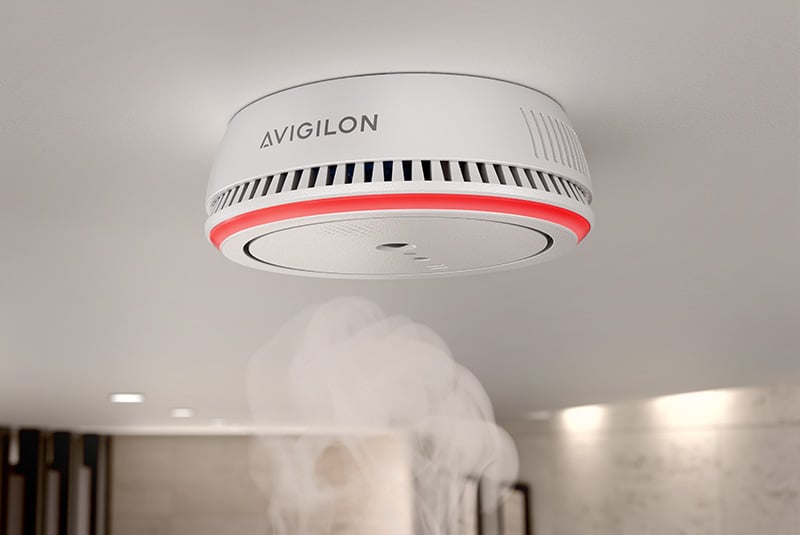
Modern systems can go further than a conventional alarm. Some advanced nicotine detectors and multi-sensor platforms can identify cigarette smoke, vaping and THC-related activity while also monitoring broader environmental conditions. For example, the Halo Smart Sensor uses multiple sensor inputs and analytics to detect cigarette smoke, vaping and THC, alongside air quality and other safety conditions.
For schools, facility managers, hospitality businesses and property operators, the goal is not simply to know that smoke is present. The real value is being able to detect cigarette smoke quickly, receive an alert and take appropriate action, without relying on cameras in privacy-sensitive spaces.
Cigarette smoke and nicotine detection benefits
Specialized detection technology provides an essential layer of visibility for maintaining secure and smoke-free environments.
- Enables proactive, real-time alerts for smoking and vaping.
- Preserves privacy in sensitive areas like restrooms and lockers.
- Reduces reliance on manual visual surveillance.
Types of smoke detectors
Not all smoking detection systems work in the same way. The most appropriate solution depends on what an organization needs to detect, where detection is required and how the resulting information will be used.
Cigarette smoke detectors
A dedicated cigarette smoke detector is designed to identify environmental characteristics associated with tobacco smoke.
Cigarette smoke contains a complex mixture of particles and gases. Multi-sensor systems can use several measurements together rather than relying on one signal alone. This can make a specialized system more appropriate than relying on a conventional smoke alarm when the objective is cigarette smoking detection rather than fire detection.
Nicotine detectors and nicotine sensors
A nicotine detector or nicotine sensor is designed to identify chemical indicators associated with nicotine use.
The term nicotine detector is often used broadly in the market, so buyers should examine the manufacturer's technical specifications carefully. Some systems are designed specifically around nicotine or vaping-related compounds, while others use multiple environmental measurements to identify smoking or vaping behavior.
For facilities where vaping is a particular concern, multi-sensor technology can be especially useful because vaping aerosols and traditional cigarette smoke have different characteristics.
Vape and THC detection
Vaping presents a different detection challenge from combustible cigarettes. Vape devices produce an aerosol rather than conventional tobacco smoke.
Advanced systems can detect vaping and, in some cases, distinguish between nicotine vaping and THC-related vaping. This makes THC smoke detectors, marijuana smoke detectors and vaping detection systems particularly relevant to schools, student residences and other facilities where conventional smoking detection alone may not address the problem.
It is worth noting that terminology varies: marijuana smoke detector and THC detector may refer to systems that detect THC-related compounds, vaping, smoke or a combination of signals. Buyers should verify exactly what a particular device detects.
Cigar and tobacco smoke detectors
Cigars can produce substantially different smoke characteristics from cigarettes. Likewise, tobacco smoke may vary depending on the product being used and the environment in which it is consumed.
Organizations concerned with smoking violations should therefore look for a system that uses multiple environmental indicators rather than assuming that every cigar smoke detector or tobacco detector will perform identically.
Portable and handheld cigarette smoke detectors
A handheld cigarette smoke detector or portable cigarette smoke detector can be useful when personnel need to investigate specific areas rather than continuously monitor them.
However, portable devices and permanently installed sensors serve different purposes. A handheld device requires someone to conduct the inspection, while a fixed sensor can continuously monitor an area and automatically generate an alert. For schools, hotels, apartments and other facilities where smoking can happen at unpredictable times, continuous monitoring may provide a stronger operational solution.
Benefits of smoke detectors
Protect smoke-free environments
A cigarette detector can help organizations identify violations of established smoking policies. This is particularly valuable in environments where smoking is prohibited but difficult to observe directly, such as bathrooms, hotel rooms, stairwells, locker rooms and apartment units.
Reduce reliance on visual surveillance
One of the biggest advantages of specialized environmental sensors is that they can monitor areas where cameras are inappropriate.This makes sensor-based cigarette smoke detection particularly relevant for schools, hotels, healthcare facilities and residential environments.
Enable faster response
A detector can automatically generate an alert when configured conditions are met. Instead of waiting for a complaint or discovering evidence after the fact, staff can receive information about a potential smoking event in real time. Depending on the system, alerts may be delivered through software dashboards, email, SMS or integrations with other security technology infrastructure.
Protect property and reduce smoke-related damage
Smoking indoors can result in persistent odors, residue and cleaning requirements. In hospitality and rental environments, repeated smoking can also create additional maintenance and remediation costs. A cigarette smoke detector for landlords, apartment operators or hospitality businesses can provide documentation that helps organizations identify patterns and respond to violations.
Improve indoor environmental awareness
Many advanced cigarette and nicotine detection systems do more than detect smoking. They can also monitor factors such as particulate matter, VOCs, carbon dioxide, temperature and humidity. This broader information can help facility managers understand the overall condition of a space rather than treating smoking as an isolated issue.
Key components of a cigarette smoke detector
The technology inside a modern cigarette smoke detector can vary significantly, but advanced systems generally combine multiple components.
Particulate sensors
Particulate sensors measure airborne particles. Smoke and vaping aerosols can cause measurable changes in particulate concentrations. Particulate monitoring can therefore provide one important signal when identifying a smoking event.
VOC sensors
Volatile organic compounds, or VOCs, are gases released by numerous materials and processes, including some forms of smoking and vaping.
VOC measurements can provide another layer of information. However, VOCs can also come from cleaning products, fragrances and other everyday sources, which is one reason multi-sensor systems can be advantageous.
Gas sensors
Depending on the system, gas sensors may monitor compounds such as carbon monoxide, nitrogen dioxide or other environmental indicators. These measurements can contribute to a broader understanding of indoor air conditions and, when combined with other signals, help identify unusual events.
Environmental sensors
Temperature, humidity, pressure and other environmental readings can help a system understand the conditions in which an event occurs. This information can be particularly useful because air movement and ventilation can affect how quickly smoke or vapor reaches a sensor.
Detection algorithms
The sensor hardware is only part of the equation. Software and algorithms interpret the data collected by the device. Multi-signal analysis can help reduce reliance on a single measurement that might otherwise produce false alerts.
Connectivity and alerting
For commercial applications, detection is most useful when the information reaches the people responsible for responding. Modern systems can connect sensors to cloud platforms, dashboards, notification systems and existing security infrastructure.
How to choose a cigarette smoke detector or sensor
Choosing a cigarette smoke detector sensor should start with the problem you are trying to solve.
Consider:
- What do you need to detect? Cigarettes, cigars, vaping, THC, nicotine or multiple forms of smoking?
- Where will detection occur? Bathrooms, hotel rooms, apartments, classrooms, restaurants, stairwells or outdoor areas?
- How large is the space? Coverage depends on the device, ceiling height, airflow and room configuration.
- How quickly do you need an alert? Real-time notifications may be important for schools and hospitality environments.
- Do you need privacy protection? Camera-free monitoring can be critical in bathrooms, bedrooms and other private spaces.
- Do you need integration? Consider whether the sensor can connect with your existing physical security system, building management or notification systems.
- Do you need historical reporting? Property managers and facility teams may benefit from event logs and trend analysis.
- What are the installation requirements? Network connectivity, power, mounting height and professional installation can all affect deployment.
Do not choose a system solely because it is marketed as a nicotine detector or smoke detector for cigarettes. Look at what the manufacturer actually says the device detects, how detection works and what environmental conditions can affect performance.
How cigarette detection sensors integrate with other technology
The biggest difference between a basic detector and a smart detection platform is often what happens after detection. A connected cigarette detection device can send an alert to a centralized dashboard, security platform or building management system. Some systems can also integrate with video management systems, access control and other third-party technologies.
For a school, a sensor might detect a potential smoking event in a bathroom and notify designated staff. For a hotel, an alert could identify potential smoking in a guest room. For a property manager, historical events could help identify recurring problems within a building.
Importantly, integration does not necessarily mean adding cameras. Camera-free environmental monitoring can provide actionable information while preserving privacy in areas where video surveillance would be inappropriate.
Installation considerations
 Consider airflow
Consider ceiling height
Identify high-risk areas
Plan the response process
Work with qualified installers where required
Consider airflow
Consider ceiling height
Identify high-risk areas
Plan the response process
Work with qualified installers where required
Modern cigarette smoke detection
A modern cigarette smoke detector is more than a conventional fire alarm. Specialized smoking detection technology is designed to identify indicators associated with cigarette smoking, vaping and other forms of tobacco or substance use, helping organizations enforce smoke-free policies and respond to incidents more quickly.
For schools, restaurants, hotels, apartment operators and facility managers, the right system can provide continuous monitoring in locations where traditional surveillance is impractical or inappropriate. The most capable solutions combine multiple sensors, intelligent detection algorithms, real-time alerts, environmental monitoring and technology integrations. That combination can turn a standalone cigarette sensor into a broader building intelligence tool.
When evaluating a system, consider what you need to detect, the spaces that require monitoring, environmental conditions, coverage, privacy, integrations and the response process that will follow an alert. The right solution is not necessarily the device with the longest list of features. It is the one that reliably addresses the specific smoking, vaping and facility-management challenges your organization faces.
Frequently asked questions