
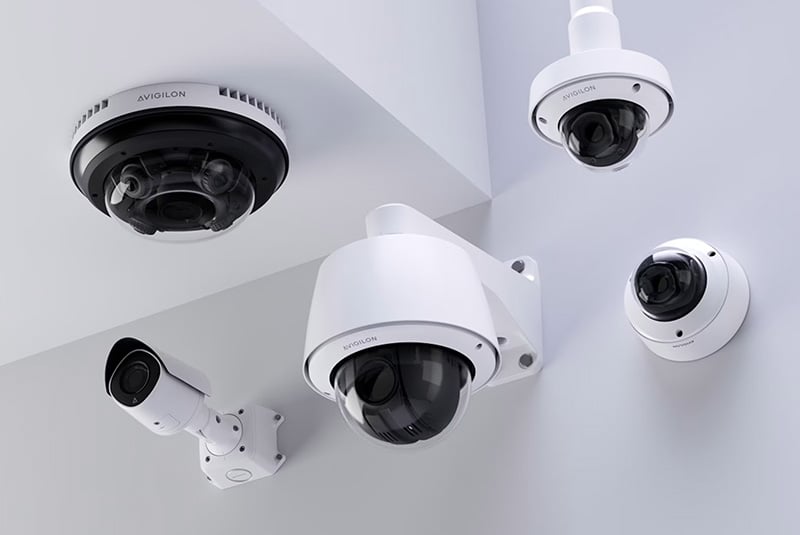








From deterring crime to providing video footage during a security incident, CCTV cameras are essential in commercial security systems. However, there is not a single solution for every project, but many options to choose from.
To determine the best CCTV system for your facility, there are many factors to consider. This guide will walk you through the important considerations and the solutions that will best suit your facility.
What is a CCTV security system?
A closed-circuit television (CCTV) camera captures video footage in specific locations and then transmits the signal through a private network to a dedicated set of monitors. Unlike standard public television broadcasts, CCTV signals are not publicly distributed.
Security cameras are used in many environments to enhance security, observe activities and help prevent unauthorized access. Some common places include commercial and business buildings, public infrastructure, manufacturing facilities and schools.
Types of CCTV cameras vary by use case and operating environment, with different designs and features offering distinct advantages for different security needs.
Help protect what matters most
Better secure your facility, people and assets with AI-powered cameras that deliver greater awareness and live alerts.
-
Wide range of cameras for every need
-
Enhance coverage with clear video 24/7
- Rapid response with real-time alerts
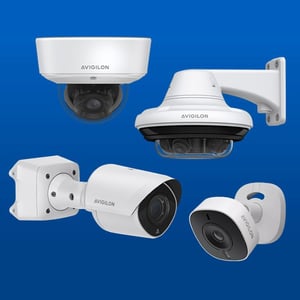
Common types of security cameras by design
Different camera designs are available to satisfy different environments and specific security requirements. Here are some of the most common CCTV camera types, from discreet indoor options to high-visibility outdoor deterrents.
Dome cameras
Dome cameras are video security solutions housed in a protective dome, making them ideal for both indoor and outdoor solutions across many locations. Key features include:
- Dome-shaped casing: They offer a sleek, low-profile design that seamlessly and aesthetically blends into its surroundings.
- Wide-angle lens: Provides broad field-of-view coverage, reducing the total number of cameras necessary to observe extensive areas.
- Tamper- and vandal-resistent: Made with durable housing that protects against harsh weather conditions and physical attacks.
- Discrete appearance: The dome housing makes it difficult for passersby to tell where the wide-angle camera lens is pointed.
Bullet cameras
Bullet cameras are a common, recognizable type of camera with a cylindrical design, usually chosen by businesses that want a visible security presence. Common features of bullet cameras include:
- Cylindrical shape: A tube-like form factor that is a recognizable look, making them easy to spot. Their visible presence helps deter potential intruders.
- Long-range capability: Can capture high-quality footage at greater distances, allowing observation of large spaces and perimeters.
- Easy-installation: Designed for a simple setup process with easy mounting on walls or ceilings.
- Night-vision settings: Most bullet cameras are equipped with advanced infrared capabilities, ensuring clear footage and coverage even while it’s dark.
PTZ cameras
Pan, tilt, zoom (PTZ) cameras are a security solution that allows for dynamic coverage over broad areas. Key features of PTZ cameras include:
- Remotely adjustable: Operators can control the camera's pan, tilt and zoom settings in real time, allowing them to follow suspicious subjects or inspect certain details.
- 360-degree coverage: Continuous panning capabilities allow for complete situational awareness, covering wide spaces without blind spots.
- Accessible control: Managed through video management software (VMS), mobile applications or joysticks for efficient and convenient operation.
Turret cameras
Turret cameras, also known as eyeball cameras, allow for the greatest flexibility of all CCTV cameras because of their design. Some distinct features of these cameras are:
- Discrete design: Their design includes a three-axis ball and socket mount and is not as recognizable as the others, making them harder for intruders to identify.
- Flexibility: Their ball-and-socket joint allows each camera to rotate in any direction without having to change the mount. This provides the best coverage of both indoor and outdoor spaces.
- High-definition images: Turret cameras are designed to capture clear, detailed video footage, delivering high-definition coverage of both short and long ranges.
Panoramic cameras
Panoramic cameras, also known as multi-sensor and fisheye cameras, offer wide-area coverage over expansive environments with optimal visibility. These cameras are known for their:
- Ultra-wide coverage: They provide a continuous wide-angle field of view, up to 360 degrees, minimizing blind spots across large spaces.
- Multi-sensor: Combines images from two or more sensors to create one large panoramic view.
- Reduced equipment costs: They replace multiple single-lens cameras with a single device, lowering installation costs and hardware expenses.
Specialized types of CCTV cameras
Beyond general design considerations, certain CCTV cameras use specialized security technologies in order to meet unique needs.
Thermal cameras
Using infrared rays, thermal cameras detect heat patterns emitted by people, objects and vehicles in order to detect and track movement, rather than relying on visible light to ensure clear footage. This helps to produce clear footage even in complete darkness and harsh weather conditions.
LPR cameras
License plate recognition (LPR) cameras are designed to capture high-contrast images of vehicle license plates. Combined with optical character recognition (OCR) technology, LPR cameras can instantly read and record plate numbers at parking lot entry points, private roads and other access points. These systems are also widely used to observe toll collection and vehicle access control by granting or denying entry based on license plate information.
Fisheye cameras
Fisheye cameras use ultra-wide angle lenses to provide a 180- or 360-degree panoramic view of expansive areas. With this functionality, a single camera can observe spaces like large open rooms, retail floors and hallways, reducing equipment costs and eliminating the risk of blind spots.
Infrared cameras
Infrared (IR) cameras, also known as night vision cameras, have built-in IR LEDs that allow vision in unlit areas using light that is invisible to the human eye. These cameras can capture clear black and white video footage in dark environments, ensuring continuous 24/7 video security.
Types of surveillance cameras by use case
Considering the specific environment and security requirements of your facility is crucial in selecting the right CCTV camera. Different use cases call for specific features in order to ensure optimal visibility, durability and protection.
Commercial environments
Commercial environments usually favor discrete cameras with wide coverage in order to observe foot traffic, protect inventory and secure entry points in places like offices, retail spaces and warehouses. Recommended cameras for these environments include:
- Dome cameras
- Turret cameras
- Panoramic cameras
Outdoor environments
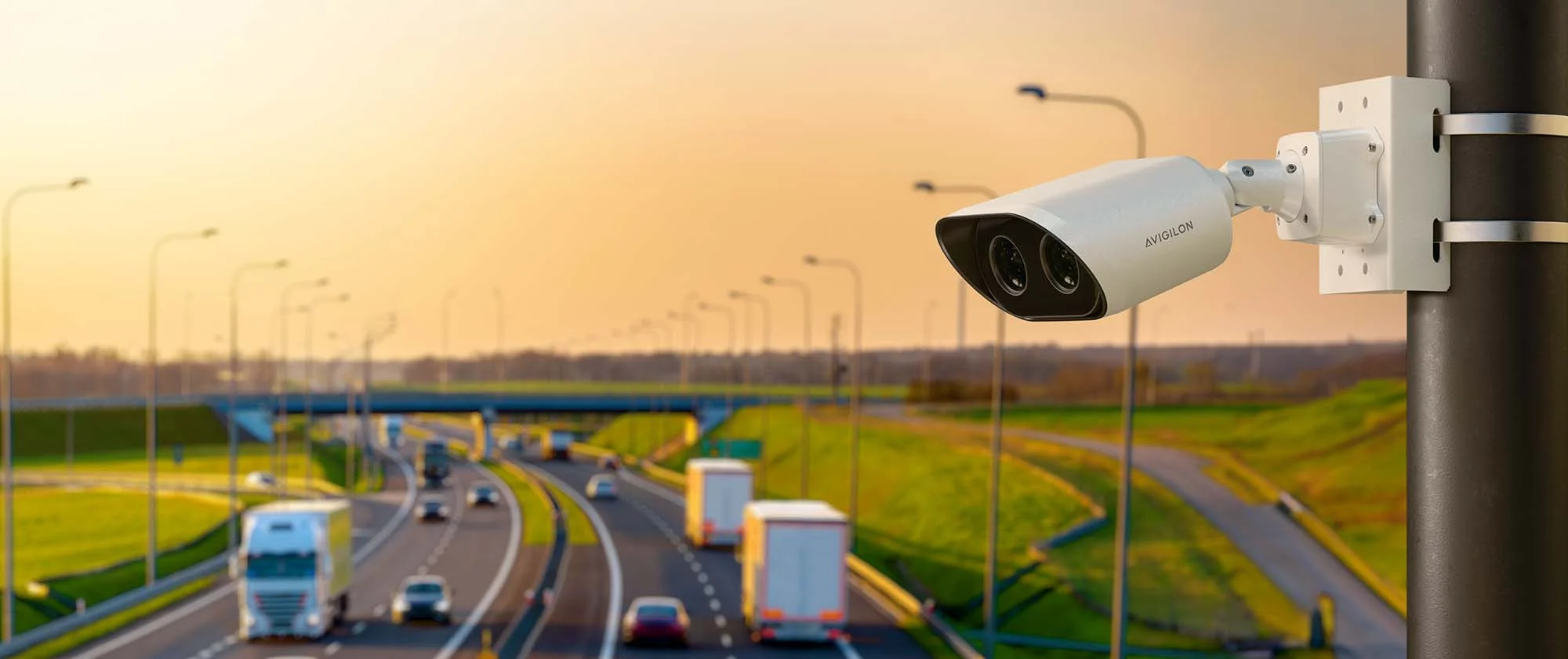
Outdoor environments require cameras that can withstand harsh weather conditions, as well as physical threats and changing light levels. These cameras are often implemented along the perimeters and outdoor walls of buildings and act as visual deterrents:
- Bullet cameras
- Vandal-resistant dome cameras
- PTZ cameras
Low-visibility environments
In environments with low-visibility, cameras that can function through the night, extreme weather conditions and unlit or shadowed areas are essential. It is important to have a system in these types of environments that can still capture critical visual details even when lighting is not ideal. Cameras that are best suited for these conditions include:
- Infrared cameras
- Thermal cameras
Parking lots
Parking lots require cameras with broad area coverage, long-range viewing and vehicle tracking capabilities. Cameras that are ideal for observing large open lots and controlling entry and exit points include:
- PTZ cameras
- LPR cameras
Security camera connection types
Choosing the right connectivity method for your space is essential for balancing system reliability, installation requirements and access capabilities. It is important to compare the options to decide which systems have the best connectivity that fit your specific needs.
How to choose a CCTV camera
The right CCTV system varies based on your specific environment, security goals and operational requirements. Here are some key questions to consider when making your decision:
1. Where will the cameras be located?
It is important to consider whether the cameras will be installed indoors or outdoors, as this plays a role in determining the need for weather-resistant casing. Evaluate the specific environment, such as high-dust or low-light areas, to ensure the selected hardware can withstand local conditions.
2. How much security coverage is needed?
Assess the size of the area that needs observing to determine the number of cameras required for full coverage. Also, consider if features like pan, tilt, zoom or specific zoom capabilities are necessary to capture details across larger areas.
3. How visible should the cameras be?
Decide if the facility needs discrete, low-profile cameras that blend into the surroundings, or visible, recognizable cameras that can act as deterrents to intruders.
4. How connected do you want to be at all times?
Consider whether you need real-time remote access or secure on-premise platforms. Connectivity ranges from constant access on a mobile app to access only on a single monitor. High-connectivity systems tend to require network infrastructure and stronger cybersecurity measures to protect your data, which costs more.
5. How often do you need video access?
Determine if you need continuous 24/7 live coverage or if you primarily need access to recorded footage to look back on in case of an incident. The frequency with which you need access will influence the type of storage solution and bandwidth requirements.
6. What is the budget for the system?
Finally, ensure to establish your total budget for the system, including the initial hardware costs and the long-term maintenance fees. Having a set budget helps to prioritize the most important features versus unnecessary additions to create a cost-effective security solution.
FAQs