
Storing digital evidence has become one of the biggest operational challenges for public safety agencies. They're handling more digital evidence than ever, often across multiple disconnected systems.
Body cameras, in-car video systems, audio recordings and case documents pour in from dozens of sources every day. For many agencies, managing all of it means juggling three to five different storage locations, manually redacting footage frame by frame and bouncing between software platforms — just to prepare a single case for discovery.
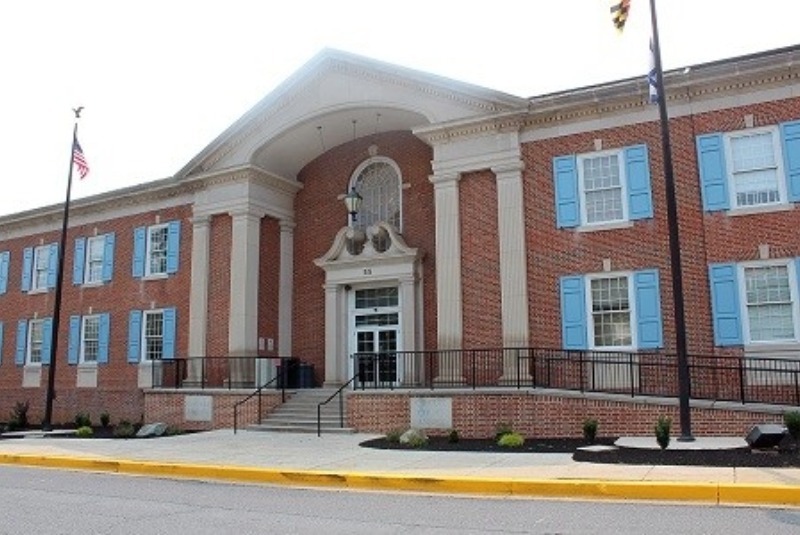
This is the reality Joshua Grove knows well. As a member of the evidence review unit at the Carroll County State's Attorney's Office in Maryland, Joshua spends his days processing body camera footage — a job that's as detail-intensive as it sounds. His story offers a clear window into what modern digital evidence management can do for law enforcement agencies and prosecutors alike.
Why storing digital evidence matters
One of the biggest advantages to DEMS from Joshua’s perspective is storage. "Instead of storing digital evidence in multiple areas," Joshua explains, "it's now in one central location and this is huge for organization purposes, and for sharing and discovery." Without a centralized storage system, evidence can get scattered across disconnected platforms, and discovery timelines can slip.
For Carroll County, CommandCentral DEMS accelerates evidence workflows by centralizing digital evidence into one secure platform. With the added functionality of AI-powered redaction and transcription, the time it takes to prepare evidence for court is dramatically reduced.
How AI redaction speeds up body camera footage review
Since Carroll County began using CommandCentral DEMS in 2025, it has seen significant efficiency gains. The biggest day-to-day benefit Joshua has experienced is Redaction Assist, a collection of AI-powered redaction tools.
Redaction is one of the most labor-intensive tasks in law enforcement evidence management. Officers' identities must be protected. Personally identifiable information — dates of birth, Social Security numbers, phone numbers — must be removed from audio. In cases involving undercover officers, every frame in which the officer appears must be shielded before footage can be released.
DEMS' Redaction Assist changes that. Before, Joshua had to work frame by frame in a separate software application, manually repositioning a redaction box across each individual image, then reviewing the case again to note timestamps, and only then returning to the footage to apply the shield. "A lot of back and forth," as Joshua puts it.
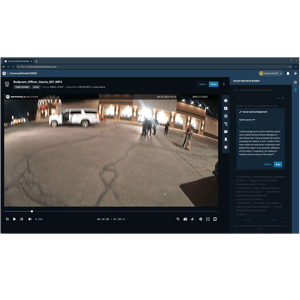
Redaction Assist streamlines and accelerates the redaction process. It catalogs common redaction targets — people, faces, license plates, vehicles, screens and documents — and follows them automatically across the frame. “It takes me about three minutes to shield officers’ faces for every one minute of video with DEMS,” says Joshua. “That timeframe is substantially lower than the software we were using before.”
In a unit handling 330 cases per month, speed translates directly to outcomes. The faster body camera footage gets processed, the sooner discovery reaches attorneys and the sooner cases move forward.
Joshua also points out that Redaction Assist produces a better looking product. "The redactions themselves just look smoother with AI versus doing it manually." That smoothness matters when footage is being shared for public information act requests, used as court exhibits or reviewed by oversight bodies.
Audio redaction that keeps sensitive information secure
Audio redaction is another area where this digital evidence management software delivers a meaningful efficiency gain. When officers ask witnesses or victims for personal information during recorded encounters, that audio must be muted before footage can be shared externally.
Previously, reviewing staff would need to listen through footage, note the timestamp when sensitive information was spoken, then return to that point to apply a mute. DEMS changes that with its Review Assist feature, which generates automatic transcripts of recorded audio and makes them searchable.
"With DEMS we now have the feature to shield through transcriptions," Joshua explains. "It runs a transcription for us. We can type in 'date of birth' and it finds where the date of birth is mentioned anywhere throughout the video, and then we can go through highlighting the person's date of birth, phone number, etc., and mute it from there."
That's a shift from reactive, timestamp-based searching to proactive, keyword-driven review. For lengthy recordings, the time savings is substantial.
CommandCentral DEMS
Manage evidence seamlessly from the initial 9-1-1 call to case closure with a complete end-to-end digital system.
-
Centralized digital evidence
-
Integrated device management
-
Evidence management AI tools
Ease of use for everyday evidence management
One concern agencies often raise about new evidence management software is the learning curve. Joshua's experience suggests DEMS clears that bar without difficulty.
"I went into the software and just started using it on my own," he says. "Overall, it was pretty quick to pick up. I think it's very user-friendly." The shortcuts feature helps reviewers move faster once they're familiar with the core workflows, and Motorola Solutions provides more structured training resources for agencies that want them.
Overall Joshua says CommandCentral DEMS "has definitely been a game changer for us."
The future of AI in storing digital evidence
Joshua is thoughtful about what AI means for agencies like his — optimistic, but measured. "AI itself is still definitely in an infancy stage," he says. "But it has been incredible seeing how it can streamline and make things more effective. Obviously there's always going to be the human involved. But it is definitely going to save time and speed things up in the long run and give us a cleaner product."
AI in evidence management isn't replacing human reviewers — it's removing the most repetitive and error-prone parts of their work, freeing them to apply judgment where it actually matters. As the technology matures, those gains will compound.
Building a more effective law enforcement evidence management workflow
The experience at Carroll County State's Attorney's Office reflects a broader truth about digital evidence management: fragmentation costs agencies time, increases risk and slows justice. Centralizing evidence, automating AI redaction and enabling keyword-searchable transcripts aren't just operational improvements — they're investments in faster, more accurate and more accountable public safety outcomes.