
One way to maintain a healthy, resilient business is to plan for the future. By forecasting and anticipating what will happen in the coming weeks, months and years, organizations can respond faster and more effectively when an emergency strikes.
When an unexpected disruption occurs, advanced warning is rarely guaranteed. That’s why a business continuity plan is essential. A business continuity plan (BCP) outlines your organization’s procedures and policies for responding to an emergency – improving both your response time and recovery.
Let’s walk through what a business continuity plan encompasses and the key steps to creating a business continuity plan that works for your organization.
What is a business continuity plan (BCP)?
A business continuity plan is a documented system for prevention and recovery procedures designed to protect your organization from potential threats, such as extreme weather, cyberattacks, power outages and more. A strong business continuity plan helps ensure that both your people and your critical assets can function quickly and effectively in the event of a disruption.
Without a business continuity plan, your organization may be slower and less effective at recovering from the negative impact of emergencies – financial loss, operational disruptions, damage to physical locations and loss of productivity among them.
With a business plan in place, you have the peace of mind of knowing you’re protecting your people, your brand and your reputation. You’ll also reduce organizational risk and build trust among your customers and partners.
It’s worth noting that a business continuity plan is not the same as an emergency communication plan. An emergency communication plan focuses specifically on sharing and disseminating information internally and externally during an emergency. Business continuity planning is broader – it encompasses the full spectrum of keeping critical operations running before, during and after a disruption.
4 steps to creating a business continuity plan
The key elements of a business continuity plan cohere across these four core steps:
1. Define your objectives and form your business continuity management team
Whether you’re starting fresh or updating an existing business continuity plan, the first step is to state a clear objective. It may be as simple as “minimize disruptions to operations,” but having a defined goal ensures the rest of your plan aligns toward the same outcome.
Your business continuity management team should include leaders with strong communication, decision-making and leadership skills. The size and composition of the team will depend on your organization, but senior representation across key functions – IT, security, operations and communications – is a strong foundation..
2. Complete a business impact analysis
A business impact analysis is the analytical bedrock of an effective business continuity plan. To conduct one, you must identify which processes and functions are essential to your organization and would be most impacted by a disruption.
While risks may vary by industry, some threats are common across all organizations:
- Worldwide pandemics: The COVID-19 outbreak demonstrated how quickly a public health emergency can change how employees work, disrupt supply chains and threaten the health and safety of organizations.
- Severe weather events: Fires, floods, hurricanes, earthquakes, blizzards and tornadoes can occur with little warning. They can threaten your people’s safety, cause physical damage to facilities and trigger significant financial loss.
- Power outages: Loss of power and utilities can severely impact day-to-day operations and damage physical assets. Service disruptions and productivity loss often follow.
- Cybersecurity breaches: Data breaches, ransomware attacks and other cybersecurity incidents can compromise confidential data and damage your organization’s reputation and financial standing. Developing a business continuity plan that accounts for cyber threats is increasingly essential for organizations of all sizes.
This step takes time, but it is crucial. Without identifying your most significant threats, building effective recovery strategies is significantly more difficult.
3. Outline recovery strategies
With your business impact analysis complete, you can begin developing recovery strategies that address identified risks and protect your essential functions. This is where business continuity plan development moves from analysis to action:
In your recovery strategies, address questions such as:
- What will the organization do if key leadership or essential personnel are unavailable?
- What happens if facilities are damaged or inaccessible?
- What is the recovery process for a cyberattack or data breach?
- What must be done if inventory is critically low?
- What is the communication plan when power, water or other utilities are down?
- What is the policy for remote work if employee health and safety are impacted?
You might also approach recovery strategy development by department rather than by risk scenario – or both. Consider how the needs of customer service, IT, security, operations, logistics, administration and third-party vendors differ, and tailor each function's role in the plan accordingly.
4. Test and improve your plan
Finally, testing is what separates a business continuity plan that exists on paper from one that works in practice. Implementing a business continuity plan without a testing and review program is a common – and costly – mistake. Present the plan to your stakeholders for formal review so that it can be refined and expanded. Encourage reviewers to identify weaknesses and gaps.
Once updates are made, move to practical testing. Effective formats include:
- Walkthroughs: Team members work through each component of the business continuity plan to identify issues before they become real problems.
- Tabletop exercises: A facilitator leads a team through a simulated scenario in a discussion format, walking through decisions and responses in real time.
- Full-scale drills: End-to-end simulations that test the complete response and recovery workflow under realistic conditions.
Following every exercise, capture lessons learned and feed them back into an updated version of the plan. Effective business continuity planning is a continuous cycle of improvement – not a one-time project.
Business continuity software
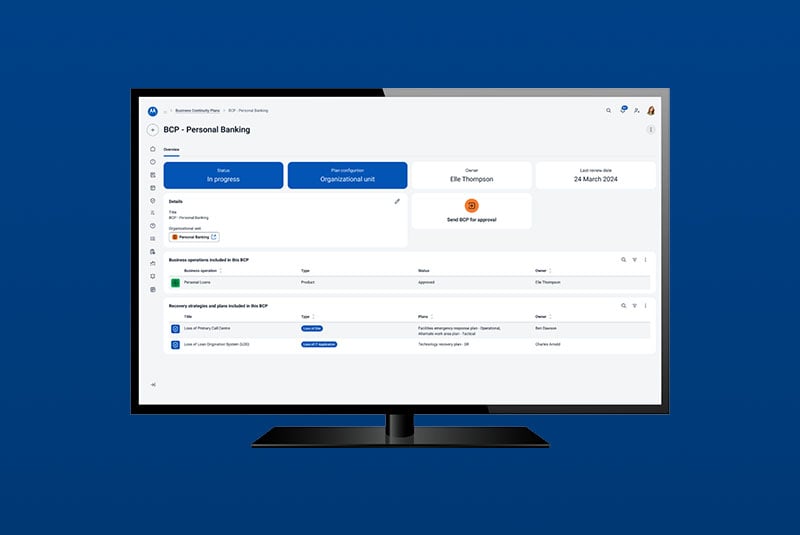
Map business dependencies, build real-time digital playbooks and optimize plans through crisis testing scenarios.
- Trade paper for confidence
- Map your critical operations
- Drive enterprise-wide engagement
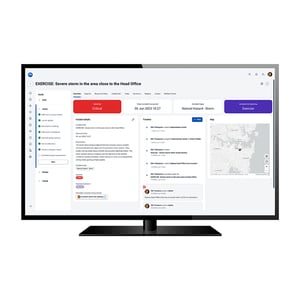
Strengthen your business continuity plan with the right technology
An effective business continuity plan prepares your organization for the unexpected – whether that’s a natural disaster, security threat, power outage or public health crisis. It reduces risk, minimizes damage and protects both your operations and your reputation.
But business continuity planning goes beyond recovering physical assets or lost data. It requires dynamic, accessible documentation that your team can act on under pressure – not static binders that become outdated the moment they’re printed.
Motorola Solutions’ business continuity software digitizes your continuity plans, keeping them live, accessible and up to date. It enables your team to capture business impact analysis data through an intuitive interface, map dependencies between critical functions and third-party vendors, test and document scenarios before a crisis hits and give leadership real-time visibility into your organization's resilience posture.
To learn more about how Motorola Solutions supports business continuity plan development for organizations of all sizes, speak to an expert.