
Trusted by 100,000+ organizations globally








While once the standard, traditional lock-and-key systems are now falling short against modern security challenges and the expectations created by technological advancements. Property managers and landlords must balance the safety and convenience of residents with their own operational requirements.
Modern access control systems provide a comprehensive solution, offering a blend of enhanced security, operational efficiency and seamless living experiences that traditional methods cannot match.
Key takeaways
- Access control replaces traditional lock-and-key systems with flexible digital credentials.
- Key components of a system include user credentials, readers, a controller and electronic locks.
- Choose between cloud-based systems for remote management or on-premise for higher data security.
- Secure main entry points, parking garages, delivery rooms, shared amenities, server rooms and more.
- Integrate access control with video security, alarms, visitor management and parking systems.
Benefits of apartment access control systems
Today, there are many physical security threats faced by apartments and residential buildings. Threats range from unauthorized tailgating and physical break-ins to cyberattacks targeting resident data.
Apartment access control manages entry to residential properties, allowing only authorized individuals to enter. Implementing these systems can help property managers to:
- Reduce crime significantly
- Provide seamless resident access
- Improve visitor management
- Review access logs and monitor credentials
These systems specifically combat physical break-ins by utilizing things like real-time entry alerts and door-tamper sensors, while modern cloud-based access platforms use enterprise-grade encryption to protect tenant data against cybersecurity threats.
Secure access control for apartments
Help keep residents and families safe with modern, intelligent and fully integrated access control systems.
-
Integrates with apartment video security
-
Works with gates, elevators and garages
-
Supports multiple credential types
How does it work?
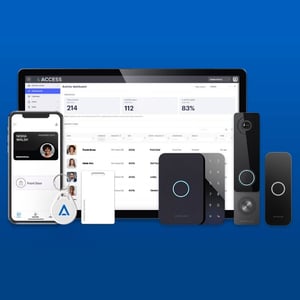
Apartment access control systems verify an individual’s credentials using a key card, fob, PIN or mobile app at a door reader. The reader then compares the credentials to information in a central database and if approved, will automatically trigger the electronic lock to open.
While access control systems for apartments are most commonly used to manage access to main entrances and parking gates, they can also be used for access to shared amenities like pools, fitness centers and elevators.
Core components
Within typical multifamily door entry systems, key components include:
- Credentials: Physical or digital keys, such as fobs, key cards, PINs or smartphones, to prove identity.
- Door readers: Hardware mounted at entry points that scans credentials and sends the data to the controller.
- Software: Platform that manages user permissions, creates access schedules, reviews and records entry logs and pushes system updates automatically.
- Electronic locks: The physical locking mechanism that automatically unlocks if access is approved. These can be magnetic locks, electric strikes or wireless deadbolts.
- Access controller: The central brain of the system that compares credentials to stored data to allow or deny access.
- Intercoms: Communication tool that allows residents to verify guests and grant entry remotely. While not every system has this component, it can enhance the safety and convenience of a system.
Common apartment building access credentials
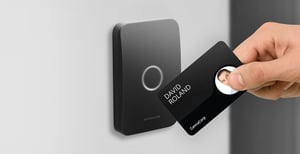
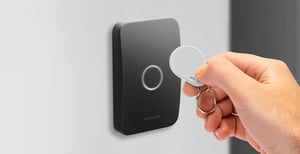
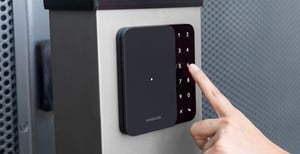
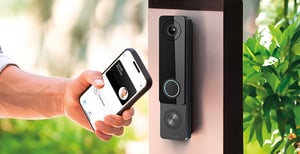
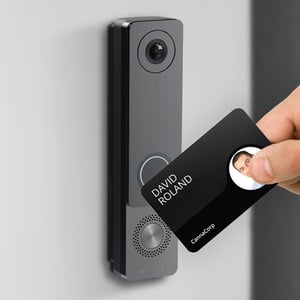
Today, apartment buildings use many electronic credentials to manage building access and entry. Unlike traditional physical keys, these modern solutions allow property managers to easily issue, adjust or revoke permissions, providing a more secure and flexible security solution for residents and staff.
Key cards
Key cards are standard physical credentials that use RFID technology to grant individuals access when held near a reader. They are easily distributed and are programmed to allow users specific access levels. They are then managed through a central digital system where security teams can observe specific access events and deactivate cards if they are lost or stolen.
Key fobs
Key fobs are compact, physical hardware that can be attached to a keychain. These are convenient and easy to use, as residents can unlock their doors by simply holding the device near the reader. Security staff can then review access logs and adjust permissions remotely.
PIN codes
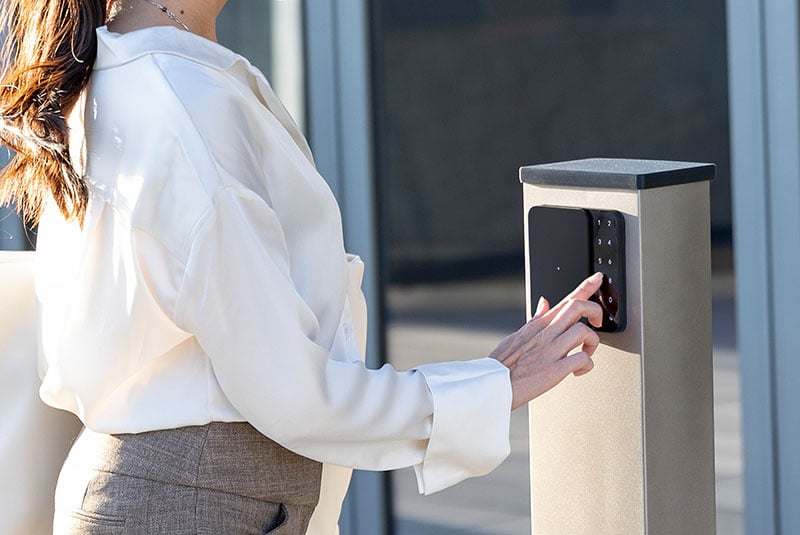
Personal Identification Numbers (PINs) or passcodes allow for keyless entry by requiring users to enter a code on a keypad reader. These tend to be cost-effective and easy to install, but are often used for lower-risk areas as codes can be easily shared or guessed. PINs are ideal for temporary access for visitors or maintenance workers.
Mobile credentials
Mobile credentials can turn a smartphone into a digital key through an app using Bluetooth or Near Field Communication (NFC) technology. This commercial access control solution offers a seamless user experience and takes away the need for a physical key or card. While this system is convenient, it also has very high security as it can leverage the built-in biometrics from each individual’s phone for multi-factor authentication.
Cloud vs. on-premise systems
Cloud access control systems can be remotely managed, as credential data and operating rules are stored on secure off-site servers. This removes the need for expensive on-site physical hardware and reduces maintenance costs.
Remote management allows property managers and landlords to grant access requests, update permissions and adjust connected devices from any device at any time. Cloud-based systems are especially helpful for properties with limited physical space, multiple premises or no round-the-clock on-site staff, providing constant control over building security.
On-premise access control systems for apartment buildings rely on local servers within the apartment building. While remote management might not be possible with this system type, it can be seen as more secure as it is isolated from external networks.
By operating entirely on a closed, private network, these systems are more protected from cyberattacks and give property managers full control over server functionality. This type of access control is ideal for high-security residential properties that prioritize local data containment and control over hardware.
Key access points for residential buildings
Strategic access control placement across key building points ensures a reliable security perimeter for residential buildings. Optimal placement of access control for apartments includes:
- Main entrances: Secure the primary point of entry to your apartment building to prevent unauthorized tailgating and provide seamless, keyless access for residents.
- Community/shared areas: Limit access to shared spaces like gyms, pools and lounges to authorized tenants.
- Delivery room: Ensure secure package management and allow courier access only to designated delivery zones while keeping the rest of the building secure.
- Parking garages: Control entry and exit to ensure only resident and staff vehicles can access the facility.
- Storage facilities: Limit access to storage areas to authorized residents only, protecting belongings.
- Utility and server rooms: Restrict access to important building infrastructure, limiting it to authorized staff only, preventing tampering and ensuring systems stay safe.
Choosing the best multi-family access control system
In order to select the right multi-family access control solution, it is important to evaluate several factors to determine if the system is both secure and user-friendly for both residents and management. Here are key factors to consider before making a decision:
1. How big is the property?
The size and type of your property will influence the choice of access control system, whether a small condo, a high-rise apartment or a large complex. Because smaller sites tend to lack space for a dedicated IT team or server room space, smaller buildings might prefer a cost-effective cloud-based system, while larger complexes might need on-site physical hardware.
2. Is there preexisting infrastructure?
Existing wiring and network infrastructure should be evaluated by property managers to determine the cost and efficiency of upgrading their systems. If new infrastructure is required, upgrading your system can be costly. If existing infrastructure is old, managers might find long-term benefits outweigh the costs by replacing outdated equipment.
3. How much security is needed?
It is important to assess the physical security risks surrounding your building, including crime data. Higher-end properties or those in busy cities and high-risk areas tend to face more risks from cybersecurity and physical threats.
Higher-risk buildings and complexes may require multi-factor authentication and 24/7 remote management. Assessing and establishing the necessary security level is key to choosing the best apartment building access control system.
4. How easy is the system to use?
Ease of usage varies from tenant to tenant, as well as system preferences. For example, an apartment building with more senior residents may choose to use simpler credentials such as keycards or fobs. On the other hand, a new, modern apartment complex with a younger, tech-savvy population, may go the other route of mobile access or biometrics.
5. Can integrations or additional units be added?
An apartment access control system should be able to integrate with technologies such as existing security cameras, visitor management and intrusion alarm systems to ensure your building is always secure.
Choosing a scalable solution also ensures that the security infrastructure can grow with the property and continue to adapt and integrate with new security technologies.
6. Does it support visitor and delivery management?
An efficient system should give residents the ability to verify any guests or delivery couriers before granting them access to the apartment building. This could range from voice recognition to video confirmation and is an important layer to a secure apartment building access control system.
7. What does maintenance look like?
Considerations don’t end once you install your system. Hardware requires ongoing maintenance and software requires consistent updates in order for the system to function effectively and securely.
With this in mind, teams with limited resources may prefer a cloud-based system to remove the need for in-house maintenance and rely on the provider to conduct automatic software updates.
8. Is there a budget that must be kept?
Property managers should establish a budget before choosing a system that takes into account both the initial installation costs of the system, including the hardware and labor, as well as the ongoing operating expenses, including maintenance and software.
Need help choosing the right solution?
Our experts can help you design a customized security ecosystem for residential building
-
Advanced AI analytics
-
End-to-end video security
-
Integrated VMS and access control
Top apartment building access control integrations
While access control improves security on its own, it becomes stronger when integrated with existing security measures. Here are some of the best apartment building access control integrations to enhance your security:
- Security cameras: Integrating IP security cameras with access control readers allows security teams to visually verify residents and staff at entry points. It also provides the ability to cross-reference access logs recorded by the access system with video footage, increasing security measures and decreasing incident response times.
- Intrusion detection systems: Connecting sensors and alarms to the access technology allows for real-time alerts in the event of forced doors, tampering or unauthorized entry. This ensures real-time alerts and quick responses to security breaches.
- Visitor check-in systems: Seamlessly integrate visitor management with access control to allow residents to grant temporary access to guests, couriers and other service providers, while continuing to maintain detailed logs of visitor activity.
- Parking management systems: Link parking gate access to management software to observe the entry and exit of vehicles, prevent unauthorized parking and only allow access to residents and authorized staff. Adding License Plate Recognition (LPR) cameras boosts perimeter security by automatically logging plate numbers and alerting teams in real-time of unauthorized vehicles attempting to enter the facility.
Invest in seamless apartment and residential access control
Implementing a modern residential access control system is no longer just a luxury. It is necessary for protecting residential and multi-family buildings. From preventing the risks of unauthorized entry to providing residents with the convenience of mobile credentials, these systems ensure the secure feeling of being at home.
FAQs