Develop an effective active shooter response plan

Over the past 20 years, active shooter incidents have become more frequent and more severe. They have occurred in public places, houses of worship, government buildings, hospitals, college campuses and elementary schools. According to the FBI, there were 223 active shooter incidents in the U.S. from 2020-2024, 70% more than the previous period.
Having an active shooter response plan is no longer optional for many of these places and organizations. Owners and administrators must develop plans to protect their people and property from active assailants. An effective active shooter preparedness plan must incorporate elements for all stages of the event, from risk assessment to recovery.
When an active shooter incident occurs, every second impacts survival. Due to the rapid development of these situations, organizations and first responders can be faced with several challenges that, if not dealt with before, can hinder an effective response. These common challenges include:
Our FedRAMP® Moderate mass notification system enables reliable, multimodal messages in just three clicks.
To prepare for active shooter situations, organizations must create and implement a comprehensive prevention and response plan.
Crucial steps that form part of the plan include:
Mass notification and communication systems, such as Rave Alert, have many vital uses in schools, businesses, healthcare facilities and communities. When selecting one, administrators must ensure it fills their organization’s requirements for general use in emergencies and crisis scenarios.
However, when selecting a communication and collaboration platform to mitigate active shooter threats, there are several essential features to consider. Incident managers and security personnel should choose solutions that offer specific functionality in active shooter events, as well as features and tools that support emergency preparedness for other crises, such as severe weather, fires, illness outbreaks and IT outages.
Key features in an advanced active shooter alert system, such as Rave Alert, include:
Authorized users can send emergency notifications with just three clicks. Notifications can be sent via multiple channels simultaneously: voice, email, desktop notifications, SMS text, social media and digital signage. Ensure students, patients, visitors, employees and remote workers get crucial details as quickly as possible during a crisis.
Collaboration and crisis management tools are vital during and following an active shooter event. Giving administrators, incident managers and campus security personnel the opportunity to connect directly with 9-1-1, law enforcement and first responders.
Sharing functionality allows key players to distribute and receive critical information: floor plans, assailant response procedures and live video of the scene.
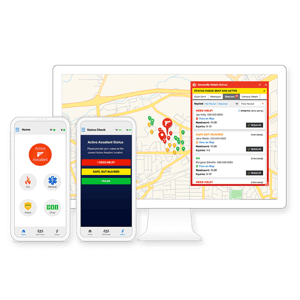
With the push of a button, rapidly dial 9-1-1, while alerting people on-site of the incident for a faster response.
One-push activation
Supply enhanced data to 9-1-1
Most businesses, government buildings and schools have alarm and PA systems already in place. Integrating new communications software with existing alert mechanisms bolsters alarm and notification capabilities, providing additional protection during any crisis and giving users as many methods of communication as possible.active shooter app.
Anyone can use an active shooter mobile alert safety app to report an incident. Pre-existing templates for common crises, including an active assailant, make it simple to contact 9-1-1 while automatically reporting the situation to designated incident managers and internal security.
Students, patients and employees can initiate response procedures immediately without having to find a physical alarm bell or search a contact list for the correct phone number.
Active shooter response procedures are infinitely more complicated when details about the situation are obscured by misinformation and unverified crowdsourced theories.
Notifying unaffected individuals of an ongoing crisis can quickly lead to panic and contribute to inaccurate social media posts and speculation. Use segmented contact lists to send emergency alerts only to intended recipients, reducing unnecessary interruptions and distress.
SMS opt-in/opt-out technology allows visitors, temporary employees and substitute teachers to elect to receive emergency alerts by signing up for them via a mobile device. HR employees don’t need to gather sensitive personal information and add non-employees to internal databases, saving time and protecting privacy without impacting safety.
Having well-documented active shooter response protocols is a critical part of emergency preparedness. Incident administrators can develop and store these crucial documents in a secure platform that’s accessible on- and off-site. Authorized users can access emergency documents during a crisis and share them with key personnel, including law enforcement and first responders.
A critical communication and mass notification system provides additional benefits beyond emergency preparedness. Managers and administrators can use the platform to send time-sensitive internal communications, ensuring that employees receive vital information via multiple channels no matter where they are. Integrated two-way communication tools support workforce engagement via status checks and polls.
Communications play a crucial role in an active shooter response plan. Mass notification tools allow incident managers to alert all affected individuals of the threat and provide them with critical instructions, such as evacuation or shelter-in-place orders.
External communication solutions are vital as well. Incident managers must be able to communicate with each other, on- and off-site security personnel, 9-1-1 dispatch, first responders and law enforcement agencies.
School staff members need multiple ways to protect students, guardians and first responders during an active shooter situation and notify them of crisis scenarios. Mass notifications can alert affected individuals of an ongoing situation and warn off-campus students to stay away from the area. Administrators can also proactively notify first responders, parents and guardians of crises, reducing the spread of misinformation, speculation and panic.
“We use the Rave Alert system, it’s one that we’ve come to depend on and it’s one that works very well.”
Traditional campus emergency alert systems, such as blue-light stations and email notifications, don’t always reach intended recipients, especially in time-sensitive situations such as active shooter events. Critical communications tools allow administrators to send multichannel alerts and collaborate response measures with on- and off-campus law enforcement.
Local government entities can leverage tools to quickly inform citizens of active assailants and law enforcement activity in their area:
Email and voice notifications support long-form active shooter alert messages. Short-form SMS text notifications provide recipients with critical details and can include embedded links with additional information. Governments can send mass notifications following a shooting to provide citizens with details on medical, legal and mental health resources.
Businesses must have emergency procedures in place to mitigate and respond to violent assailants, whether they are disgruntled former employees, mentally ill workers or individuals without ties to the business.
Administrators can quickly notify onsite and remote workers of a situation and provide crucial evacuation or shelter-in-place instructions. Incident managers can coordinate response procedures directly with 9-1-1 and local law enforcement.
Healthcare administrators can keep patients, staff and visitors apprised of emergency events, including everything from suspicious behavior to active attacks. Incident managers can coordinate with 9-1-1 and provide crucial details, such as floor plans and schematics.
Communication tools can be seamlessly integrated with existing alarms and emergency alert infrastructure to create a safer environment for staff and patients.
In active shooter situations, preparedness and communication is key. Motorola Solutions offers active shooter alarm systems to help government entities, schools and corporations of all sorts prepare for such situations.
Our comprehensive communications systems pair forward-thinking technology with a simple user interface, helping ensure administrators, emergency responders, employees and students can use and benefit from them. To see how these solutions can protect your organization, contact our sales team today.
.jpg?width=300&name=Rave_Mobile_50-50%20(1).jpg)